Lombardy
From EpiMedDat
In Lombardy, a total of 26 epidemic events are known so far. It is a region.
Map of events in Lombardy
Table
| Disease | DateStart date of the disease. | SummarySummary of the disease event | OriginalOriginal text | TranslationEnglish translation of the text | ReferenceReference(s) to literature | Reference translationReference(s) to the translation |
|---|---|---|---|---|---|---|
| 1276-00-00-Italy | 1276 JL | Price increase in Genoa, Lombardy, Tuscany, France and in complete Italy, poverty migration and disease | In iam dicto anno [1276] victualium magna fuit penuries nedum in Ianua et districtu, set etiam in Lonbardia, Tuscia, Provintia et Francia, et quasi in Ytalia tota. In Ianua enim et districtu usque in solidos 40 frumenti mine singule vendebantur; quod autem durius est audire, nedum frumentum set nec etiam granum poterat reperiri. Qui enim granum habebant, illud ad libitum vendere potuissent, quantumcunque voluissent inde habere pretium; nisi iussio emanasset qua fuit cunctis inhibitum, ne ultra certam summam frumentum vel granum aliquatenus venderetur. Tanta autem victualium inedia nedum per totum illum annum set etiam quasi per totum sequentem regnavit, quod homines fame peribant. Qua ex causa urgente fame et fructuum paupertate, magna mulierum et hominum multitudo cum eorum familias etiam parvulis quos in cunabulis deferebant, fines Lonbardie, Tuscie, Provintie et totius Ytalie famem fugientes est egressa. Ex diversis quidem civitatibus locis et villis et quasi ex totius Lonbardie et Ytalie finibus homines mulieres magni et parvuli undique concurrebant, qui quasi fame consumpti velud mortui apparebant. Qui omnes habuerunt ad civitatem Ianuensem recursum, et quamquam Ianuensis civitas magna victualium laboraret inopia, tamen ad se fugientes non repulit; set ipsis miseris et oppressis fame [p. 283] compatiens manum aperuit et panem suum et omnia neccessaria eisdem esurientibus ministravit. Illo quippe anno et quasi toto sequenti aer infectus et pestilens celum fuit, et ad hec in omnibus iam dictis partibus morbus invaluit, quod infinitos homines et mulieres magnos et parvos fere in omnibus Ytalie partibus mors invasit. | Obertus Stanconus et al. 1863, pp. 283–284 | Translation needed | |
| 1277-00-00-Italy | 1277 JL | Epidemic with deaths in Italy and Lombardy. | De magna hominum mortalitate, et de domino Mastino, qui interfectus fuit.[…] Et eodem anno (1277) fuit mortalitas maxima et magne infirmitates hominum, puerorum et mulierum quasi per universum orbem et maxime in regno Ytalie et Lombardie. | About the great mortality of men, and about Lord Mastino, who was killed. [...] And in the same year (1277), there was the greatest mortality and great illnesses of men, children, and women almost throughout the entire world, especially in the kingdom of Italy and Lombardy. | Salimbene De Adam 1966, p. 727. | Translation by Martin Bauch |
| 1277-00-00-Lombardy | 1277 JL | Epidemic with many deaths and strong price increase of grain in Lombardy and Italy | Item eodem anno fuit maxima caritudo blave, ita quod sestarium furmenti fuit positum in asetum [fixing the price] ad decem solidos imperiales spelte v solidos imperiales; et secrete per episcopatum vendebatur xx solidis imperialibus starium furmenti. Et magna mortalitas hominum, infancium et mulierum fuit per Lombardiam et totam Ytaliam [...] Et illo anno fuit paucum blaudum per totam Lombardiam, ita quod starium furmenti vendebatur xij solidis imperialibus et starium spelte vj solidis imperialibus. Et fuit magna mortalitas per totam Lombardiam | Template:Bonazzi 1902, p. 33 | Translation needed | |
| 1283-00-00-Italy | 1283 JL | Cattle disease in (northern) Italy, Lombardy and Romagna. | Et eodem anno fuit maxima bovum mortalitas per totam Lombardiam, Romagnolam et Ytaliam | Albertus Miliolus 1903, p. 562 | Translation needed | |
| 1283-00-00-Italy 002 | 1283 JL | Cattle death, in the following high mortality among humans in 1284 | 1283 - De mortalitate boum que fuit hoc anno. Quod sequenti anno fuit hominum mortalitas subsecut[a]. Item supraposito anno Domini MCCLXXXIII fuit maxima boum mortaliltas per totam Lombardiam, Romagnolam et Ytaliam, et sequenti anno subsecuta est mortalitas hominum. Nam apud Salinum in Burgundia in quodam loco fratrum Minorum habitabant XXII fratres, quos ibi vivos invenit quidam frater Gallicus qui habitabat in Grecia et ibat Parisius; eodem anno, cum reverteretur, invenit XI ex illis mortuos, id est medietatem numeri supradicti. Audivi ab ore ipsius hec eadem apud Regium. In aliis vero partibus mundi eodem anno mortui sunt similiter multi. Et breviter ista est regula generalis, ut, quotienscumque fuerit mortalitas boum, statim sequenti anno mortalitas hominum subsequatur. | Template:Salimbene De Adam 1966, p. 754 | Translation needed | |
| 1312-06-00-Parma | June 1312 JL | Severe epidemic in Parma and also in complete Lombardy with many deaths, mainly men, but also heat; poor people mow wild grass and sell it. | De mense junij, julij et augusti magna mortalitas fuit in civitate Parme, et etiam per Lombardiam, hominum, et pauci qui infirmabantur, liberabantur, et infra octo vel novem dies moriebantur, ita quod prohibitum fuit mortuos cridari per commune Parme per civitatem, sicut antea moris erat; et hoc evenit magis in civitate Parme quam in episcopatu, et magis in masculis quam in feminis; et multi infirmi fuerunt. Et eo tempore maximus calor fuit, et per multos burgos civitatis et stratas erbe selvatice et pabulum nascebatur sic et in campaneis, it quod ribaldi metebant pabulum et erbam que dicitur zovenzonum per burgos et stratas civitatis et portabant eam ad vendendum. | Bonazzi 1902, p. 125 | Translation needed | |
| 1313-05-00-Lombardy | May 1313 JL | Price increase in Lombardy leads to famine deaths and in summer an epidemic throughout Italy | De mense Maii fuit maxima Caristia per totam Lombardiam, adeo ut multi morerentur in viis, & domibus fame terribili. Et ipso mense obiit Dominus Henricus Episcopus Rhegiensis, & tota illa aestate fuit morbus maximus per totam Italiam | Template:Chronicon Regiense, p. 24 | Translation needed | |
| 1321-08-00-Parma | August 1321 JL | Great cattle mortality in Parma, surrounding areas and all of Lombardy. | Gran mortalità di bovi e bestie bovine ne l'episcopato di Parma masime al piano e per tutta Lombardia. | Great mortality of bovines and cattle in the episcopate of Parma maxime on the plain and throughout Lombardy. | Bonazzi 1902, Sp. 164. | Translation by DeepL |
| 1347-00-00-Lombardy | 1347 JL | Cold weather followed by famine. Then outbreak of the Black Death in parts of Lombardy, especially in rural areas, but also in Varese; plague spares Milan, Novara, Pavia, Cuneo and Vercelli. Source is notorious for confused, imprecise and contradictory chronology<a href="#cite_note-1">[1]</a> | Dixeram supra quod tunc temporis nix erat magna et fuit verum; nam duravit super facie terre usque ad finem raensis martii vel quasi, propter quam campestria tantum fastidium frigoris et undacionis susceperunt quod biada, nive recedente, ut plurimum mortua aparebant. Ex qua multe terre habitatoribus private fuerunt, maxime in montanis partibus; deinde, fame cessante, cepit morbus prosiliens a partibus ul'tramarinis partes inferiores invadere; et primo Bononiam applicuit, videlicet anno MCCCXLIIII, in qua civitate infiniti perierunt, omni defensione et medela destituta. Due partes autem corporum dicebantur periisse. Invasitque pestilencia Januam ubi simili modo perierunt; invasit Parmam in qua multi defecerunt. Servavit Mediolanum, Papiam, Novariam, Cumas, Vercellas, set discurrando occupavit Lombardiam a dicto anno usque annum MCCCXLVII, ubi iterum super districtu Novarie vigebat; nam in dicto districtu Momum vacuavit, Bellanzagum similiter et in Burgomanerio ', ubi conversationem habebam, ubi dicti viri belligeri habitabant, perlerunt dieta clade in tribus mensibus prò completis centenaria xxvii virorum, computatis mulieribus et parvulis, nec in aliìs terris tunc insilivit novariensibus; in comitatu autem Mediolani in partibus Varixii, Anglerie, Gallarate et circumstanciis ut supra, sine numero perierunt. Cessavit itaque dieta pestilentìa moriendi, tamen in aliquibus locis discurrendo. | I mentioned above that at that time there was a great snowfall, and it was true; for it lasted on the surface of the earth until the end of March or nearly so. Because of this, the fields suffered so much from the cold and flooding that, when the snow melted, most of the crops appeared dead. As a result, many lands were deprived of their inhabitants, especially in the mountainous regions. Then, as the famine ceased, a disease began to spread from the overseas regions, invading the lower areas. It first struck Bologna in the year 1344 (sic!), where countless people perished, lacking any defense or remedy. It was said that two-thirds of the population died. The pestilence then invaded Genoa, where many similarly perished, and then Parma, where many died as well. Milan, Pavia, Novara, Como, and Vercelli were spared, but the disease spread throughout Lombardy from that year until 1347 (sic!), when it again raged in the district of Novara. In that district, it emptied Momeliano, Bellinzona, and Borgomanero, where I lived, and where the mentioned warriors lived. In three months, 2,700 men perished, including women and children, and the disease did not attack other lands in Novara at that time. However, in the surroundings of Milan, in the regions of Varese, Angera, Gallarate, and the surrounding areas, countless people perished. Thus, the aforementioned pestilence ceased in its deadliness, though it continued to spread in some places | Cognasso 1926-39, p. 53. | Translation by Martin Bauch |
| 1347-11-00-Italy | November 1347 JL | Arrival of the Black Death in Genoa and spread across Italy; but Parma and Milan remain almost untouched | Nelle parti oltra mora per più sei mesi fu grandissima pestilenza, la quale dalle galee de' Genovesi fu portata in Italia; e furono a Genova ricevute del mese di Novembre le prefate galee, sulle quali, prima che arivassero a Genova, era morta di questa mala influenza la maggior parte di coloro, che vi erano sopra: il rimanente morì quasi subito che furono in Porto e patria loro, questa infermità si allargò nella Citta, & infiniti ne morivano il giorno, & in breve per ogni Città di Lombardia, di Toscana, della Marca, della Puglia, e per ogni terra d'Italia si estese. E fu grandissima due anni continui, per la quale molte Città d'Italia furono distrutte; e sole Parma, e Milano pochissimo ne senterono; ma si sparse oltra monti, in Provenza, in Francia, in Aragona, in Spagna, in Anglia, in Alemagna, in Boemia, in Ungheria. | In the parts beyond the sea, for more than six months, there was a great pestilence, which was brought to Italy by the Genoese galleys; and in November, the aforementioned galleys were received in Genoa, on which, before they arrived in Genoa, the majority of those on board had died from this bad influence: the rest died almost immediately upon reaching their port and homeland. This disease spread in the city, and countless people died each day, and soon it extended to every city in Lombardy, Tuscany, the Marches, Apulia, and throughout all of Italy. It was exceedingly severe for two continuous years, during which many cities in Italy were destroyed; only Parma and Milan felt it very little; but it spread beyond the mountains, into Provence, France, Aragon, Spain, England, Germany, Bohemia, and Hungary | Giovanni di Cornazano 1728, col. 746 | Translation by Martin Bauch |
| 1347-11-00-Italy1 | November 1347 JL | Societal consequences of the Black Death across Italy | anzi tutto il Mondo sì Cristiani, com Infedeli ne furono infetti, e furono da servi, da' Medici, da' Notari, da' Preti, e Frati, abbandonati gl' Infermi, tal che non erano serviti nè curati, nè potevano testare, nè confessi o contriti assoluti morire i miseri Apestati. La cagione di ciò era, che subito che s'apressavano a gl'Infermi, cadevano in cotale disavventurata peste, e morivano per lo più di subito, tanto che molti insepolti restavano, e l'uno, e l'altro abbandonato laiciava, nè conoscevasi che Padre avesse Figluoli, nè Moglie Marito, nè Amico compagno, e quantunque molti ricchi morissero, non erano allora pronti gli heredi a cercare i posessi dell facultadi; anzi senza prezzo era tutta la richezza tenuta; nè più si conosceva gli avari avere l'oro più che la vita caro. Cosa horribile a vedere, che gli huomini abbandonando gli huomini, gli odi, le invidie, le lascive, le facoltà, l'amore terreno, tutti volti in timore d'horrida e spaventevole morte. | The whole world, both Christians and infidels, were infected, and the sick were abandoned by servants, doctors, notaries, priests, and friars, so that they were neither served nor cared for, nor could they make a will, nor die confessed or absolved, the miserable plague victims. The reason for this was that as soon as they approached the sick, they fell into such unfortunate pestilence and died almost immediately, so that many remained unburied, and one and the other abandoned each other, and it was not known that a father had children, nor a wife a husband, nor a friend a companion. And although many rich people died, the heirs were not then ready to seek their possessions; rather, all wealth was held without value, and it was no longer known that the avaricious held gold dearer than life. It was horrible to see that humans, abandoning humans, hatreds, envies, lusts, possessions, and earthly love, all turned to fear of a horrible and frightening death | Giovanni di Cornazano 1728, col. 746 | Translation by Martin Bauch |
| 1347-12-25-Avignon | 25 December 1347 JL | Great mortality in the south of France, especially in Avignon. | Quo eciam tempore maxima mortalitas viguit in Grecia in Thurchia ac Lompardia Tussia ac in provincia Waschonia et in Francia, quod ville et civitates alique dicebantur incolis destitute. Nam in civitate Avenionensi a festo nativitatis domini [25.12.1347] usque ad festum omnium sanctorum [01.11.1348] cclxxx milia hominum decesserunt, inter quos sex cardinales duces fuerunt transeuntium de hoc mundo ad patrem. | During this time, there was also enormous mortality in Greece, Turkey, Lombardy, Tuscany and the province of Vashonia [Gascony] as well as in France, so that houses and cities were named that were without inhabitants. For in the city of Avignon, 280,000 people died from the Feast of the Nativity of the Lord [25 December 1347] to the Feast of All Saints [1 November 1348], including six cardinals who passed from this world to the Father. | Henricus de Diessenhofen 1868, p. 65. | None |
| 1348-00-00-Europe 002 | 1348 JL | These passages describe the catastrophic events of the year 1348 in Europe, including the plague. They mention predictions about political upheavals, famine and other catastrophies like extreme weather. | De magna pestilencia. Item eodem tempore et anno immediate sequenti in curia Romana Avinionis et in vicinis ibi partibus in Marsilia et Ytalia ac multis maritimis citra et ultra marinis regionibus, eciam in Francia Anglia Ungaria Karinthia Austria Bawaria Swevia et Alsacia ac in partibus Reni et aliis plerisque Germanie partibus, et precipue in locis aquosis et in alpibus cacuminibus et convallibus partium montanarum (p. 474) tam maxima pestilentia seu mortalitatis hominum tanta fuit et est, quod plerumque una in hospicio moriente persona ceteri cohabitantes homines et sepius quasi subito moriuntur. De eventibus lamentosis sub anno subscriptio. Anno domini m.ccc.xl.viii. multa mirabilia contingent, ut astrologus maximus attestatur. Unus solus erit dominus. Imperium Romanum exaltabitur. Magna rixa erit in terra. Tyrannus Rex Francie cadet cum baronibus suis. Magna effusio sanguinis. Papa dissipabitur cum cardinalibus suis. Erit magna fames et mortalitas. Hec vero iam in multis partibus Lombardie. Magnus calor in estate. In hieme magna siccitas. Semina corrumpuntur. Vindicabitur vindicta novi regis. Transfigurabitur regina veneris. Pulices locuste et animalia venenosa habundabunt, et multa mirabilia in aere apparebunt. | On the Great Pestilence. Likewise, at the same time and in the following year, in the Roman court at Avignon and in nearby areas, in Marseille and Italy, and in many maritime regions on both sides of the sea, also in France, England, Hungary, Carinthia, Austria, Bavaria, Swabia, Alsace, and in the regions along the Rhine and other parts of Germany, and especially in watery places and in the peaks and valleys of the mountainous regions, there was such a great plague or mortality of people that often, when one person died in a house, the other cohabitants and people would soon die almost immediately. On the Lamentable Events of the Year Described Below. In the year of our Lord 1348, many marvelous events occurred, as the greatest astrologer attests. There will be one sole lord. The Roman Empire will be exalted. There will be a great conflict in the land. The tyrant King of France will fall with his barons. There will be a great bloodshed. The Pope will be dispersed with his cardinals. There will be great famine and mortality. This has already occurred in many parts of Lombardy. There will be great heat in the summer. In winter, there will be great drought. Seeds will be corrupted. The vengeance of a new king will be exacted. The Queen of Venus will be transformed. Fleas, locusts, and venomous animals will abound, and many marvels will appear in the sky. | De chronicis temporum hominum modernorum 1843, pp. 473-774. | Translation by ChatGPT-3.5 |
| 1348-00-00-Florence | 1348 JL | In this long plague treatise-like passage, the author describes the Black Death in Florence with its symptoms, death toll and consequences. He describes how to behave in order to avoid the disease and be better prepared, although it is not possible to avoid it with certainty. He also advises people to flee infected areas early and to listen to the doctors' instructions. | Negli anni di Cristo 1348 fu nella città di Firenze una grande mortalità di persone umane le quali morivano di male pestilenziale; e molti gran fatti se n’ode dire dalle persone antiche e assai se ne truova iscritti; e fra gli altri ne (p. 230) scrive assai chopiosamente messer / (c. 65v) Giovanni Bochacci inn u·llibro che fecie di ciento novelle, ed è nel prencipio del libro. Di prima chominciò lavgiente a morire di cierto enfiato che venia chon gran doglia e chon repente febre o nell’anguinaia o sotto le ditella o nella ghola, da piè dell’orechie; e viveano quatro o sei dì. Di poi grebbe, e morivano in due dì o meno; e inn utimo e’ si venne tanto a spargiere questo veleno, che si dimostrava in cierte bolle pichole ch’apariano nelle charni per qualunche luogho della persona: e queste erano più pericholose che l’enfiato e di meno rimedio. E di poi, più nel chuore della moria, aparivano a’ più pe·lle charni cierti rossori e lividori, e sputavano sanque od e’ gittavano pel naso o di sotto: e questo era pessimo sengnio e sanza rimedio. E, brieve, e’ chaschavano, e grandi e piccioli, da un dì a un altro: inn una ora si vedea ridere e mottegiare il brighante e nell’ora medesima il vedevi morire! E venne la chosa a tanto, che molti ne morivano pe·lla via e su pe·lle panche, chome abandonati, sanza aiuto o chonforto di persona: solo erano posti quivi perché fussono da’ vicini sotterrati per fuggire il puzo. E tale vi s’andava, che ssi vedea solo in chasa e abandonato, per avere qualche sochorso. Molti per farneticho andavano impazando pe·lla terra; molti se ne gittavano ne’ pozi, a tterra delle finestre e inn Arno; e tale s’uccideva per gran farneticho o per gran pena o dolore. Molti si morivano che non erano veduti e ’nfradiciavano su pe·lle letta; molti n’erano sotterrati che anchora erano vivi. Non si trovava chi gli servisse né chi gli sotterrasse; e più, che se ttu avessi voluto un testimone a un testamento, tu non llo potevi avere, o se pure ne trovavi niuno, e’ voleva sei o otto fiorini. Aresti veduto iª crocie ire per un chorpo, averne dietro tre o quatro prima giungniesse alla chiesa: assai n’erano posti la notte alle reggi di fuori della chiesa e nella via n’erano gittati assai. Molte chose maravigliose si vidono: assai, per vicitare uno infermo, per ghovernallo o ttocharlo, o llui o suoi panni, di fatto chaschare morti. E fra ll’altre chose, dicie messere Giovanni Bochacci che vide due porci grufolare e stracciare cierti pannicielli d’un povero uomo morto, rimasi nella via: di fatto i detti porci chascharono morti su que’ cienci istracciati da lloro. O vedi di quanto pericholo e di quanto rischio questo male pestilenziale è: non si può troppo guardare. Ora, chome voi avete in parte veduto e potuto chonprendere, la moria fu innistimabile, e diciesi, e chosì fu di cierto, che nella nostra città morirono i due terzi delle persone; ché era istimato / (c. 66r) che in Firenze avesse in quel tenpo CXX mila anime, che nne morirono, cioè de’ chorpi, ottantamila. Pensate se fu frachasso! Non è da prenderne gran maraviglia perché questo fusse, ché molte chagioni ci furono da inciendere il malore; e fu maggiore maraviglia, chi chonsiderasse bene ogni chosa, di que’ che chanparono che di que’ che morirono. E lle chagioni furono in parte queste, cioè: in Firenze non si chonoscieva, diciamo pe·lla chomunità, questo male, perché a gran tenpo non era apparito; era Firenze molto ripiena di giente e di più quantità ch’ella fusse mai; l’anno dinanzi era suto in Firenze gran fame, e credo non era nel centinaio venti che avessono pane o biada alchuna, e quelli chotanti n’avevono pocho: (p. 231) vivettesi d’erbe e di barbe d’erbe e di chattive, non lle chonoscieresti oggi, e beevano acqua, e tutto il chontado era pieno di persone che andavano pasciendo l’erbe chome le bestie. Chonsidera chome i loro chorpi erano disposti! Apresso, chom’è detto, e’ non aveano arghomento né riparo niuno; e fu la chosa sì grande e ssì aspra, che ll’uno non poteva atare l’altro di nulla, e per queste chagioni e’ si morirono sanza rimedio. Oggi è avvenuto, per esenpro di questa e di molte altre che spesso sono di poi istate, che ci s’è preso assai ripari, non però che gran danno non faccia; ma pure credo che assai ne chanpano per virtù de’ rimedi, ché dichono e medici che lle reghole ch’essi danno per rimedio di questo veleno è uno armarsi alla difesa. Non è però che uno che sia molto bene armato non possa essere morto, ché gli fia dato d’una lancia o d’una ghiera o d’una bonbarda o prieta che ll’ucciderà; chosì potrà avenire al buon uomo, che fia provveduto contro alla pestilenza, e gli giungnierà una nebbia o un puzo di chorruzione o un fiato d’altro malato che fia più forte di lui e ucciderallo pure. Ma che è? Egli è assai chiaro che a una zuffa mortale à gran vantaggio chi è bene armato, e meno ne muoiono che de’ disarmati; e però vo’ dire che’ rimedi sono buoni. Vuolsi avere chonsiglio chon valenti medici e pigliare per iscritto loro chonsiglio o loro riciette, e quelle osservare diligientemente e non se ne fare punto beffe. Da mme voglio abbi questo chotanto chonsiglio. Tu udirai dinanzi che lla mortalità sia nella città di Firenze un anno o due, perché prima offende la Romangnia o lla Lonbardia che lla città nostra, e quasi per uso l’anno vengniente ell’è in Firenze; o almeno il verno dinanzi tu nne sentirai qualche isprazo o nel contado o nelle pendici della terra, il perché chiaro si prosu/me (c. 66v) la mortalità dovere essere in Firenze. E sappi che di febraio ella comincia a ffarsi sentire dentro, e chosì va crescendo tutto lulglio; e da mezo luglio in llà ed ella s’apicha alle persone da bene e a quelli che sono vivuti regholati, e chomincia a morire meno giente, ma de’ migliori. E quest’è perché il veleno è tanto isparto e tanto t’à chonbattuto, che t’à rotte l’armi e passato dentro; e per la dura della battaglia e’ ti viene a strachare e a pocho a pocho a chorronperti, e ’nfine e’ t’abbatte. E però piglia questo riparo. Chomincia il verno dinanzi a ghovernare te e la tua famiglia tutta per questa via. Prima, fa di quardarti dall’umido quantunche ttu puoi e non patire punto il freddo. Apresso, usa il fuocho ongni mattina prima escha fuori e piglia qualche chosa sechondo lo stomacho che ài: o un pocho di pane e un mezo bichiere di buon vino o di malvagia, o una pillola apropiata a cciò, o un pocho d’utriacha quando fusse piove o umidori, de’ quindici dì due o tre mattine a llato, sul dì, e prima ti levi e dormi un pocho poi; e non mangiare nulla da ivi a ore cinque. Se tti venisse beuto o volessi bere un mezo bichiere di malvagia sarebbe buono, ma non altri vini grossi; o sse avessi lo stomacho debole o frigido, piglia degli otto dì una volta a tai tenpacci una barba di gengiovo (p. 232) in chonservo e bei un mezo bichiere di malvagia, e sta di poi cinque ore che ttu non mangi altro. O ttu piglia un gherofano o un pocho di ciennamo o uno ghughiaio di tregiea o quatro derrate di zafferano o due o tre noci chotte e due o tre fichi sanza pane o qualche chosetta, sechondo che sse’ chonsigliato. E quello vedessi ti faciesse noia lascialo istare; e se llo stomacho istà meglio digiuno, non gli dare impaccio. Non uscire fuori troppo avaccio: quand’è nebbia e piova istatti al fuocho. Desina all’ora chonpitente, mangia buone chose e non troppo; levati chon buono apitito, quarti dalle frutte e da’ funghi, non ne mangiare, o pocho e di rado. Esercita la persona, ma non chon faticha, che ttu non sudi e non n’abbi ’ansare o a sciorinarti de’ panni; quarti dal chiavare e dalle femine, non ti impacciare chon niuna in quell’anno. Non mangiare e non bere se non n’ài voglia; e quando avessi in sullo stomacho, lascialo prima digiestire e di poi ista un’ora prima mangi o bei. quarti dalla ciena, pocho mangia e buone cose; non mangiare porcho in niuno modo; usa, se ài buono istomacho, l’acieto e ll’agresto, ma non tanto ti desse noia a smaltire. Fa di stare sobrio del chorpo e che ttu escha il dì due volte il meno: se fussi istiticho e duro del chorpo, fatti uno arghomento degli otto dì o de’ quindici dì. / (c. 67r) Non ti raviluppare troppo nel dormire, levati al levare del sole. E ’n questa forma passa il verno. E tenendo questo o migliore istile, tu verrai a purghare lo stomacho overo il chorpo tutto, per modo che lla churrezione dell’aria non troverrà materia d’apicharsi. Alla primavera o veramente di marzo tu sentirai dove è buono fuggire. Aspetta che de’ tuoi cittadini si muovano: non volere essere de’ primi, ma, partitone quatro o sei piglia partito e va dove ne vanno i più e in sì fatta città che pel tuo danaio tu truovi ciò che bisongnia alla santà del corpo. Non essere isciocho, o per masserizia o per niuna chagione, di rinchiuderti in chastella o in ville o in lluoghi che non vi sia e medici buoni e medicine che nne interviene che l’amicho si muore e spende nella fine due tanti che gli altri ed essene fatto beffe, sanza il dolore e i·rripitio dell’animo che mai te ne puoi dare pacie. Non sono tempi da masserizia, ma da trarre il danaio d’ongni luogho che ttu puoi; e spendi larghamente nelle chose che bisongnia, sanza niuna masserizia che ssia però che non si guadangniano se non per ispenderli per chanpare o vuoi per vivere e per onore, o nelle brighe o in simili casi. E però ti chonforto del fuggire presto e quest’è il più sichuro ischanpo ci sia. Fa d’avere de’ denari: e non giuchare, ché potresti rimanere sulle secche, e a que’ tenpi se ne truovano molto pochi che te ne prestassono per molti rispetti. Sì che sia savio: provediti tanto dinanzi rauni treciento fiorini il meno, e non ne tocchare mai niuno se non abbisogni e non dire che ttu gli abbia, ché ti sarebbono chiesti. E togli chasa agiata pe·lla tua famiglia, e non punto istretta, ma chamere d’avanzo. E nella istate usa chose fresche: buoni vini e picholi, de’ polli e de’ chavretti e de’ ventri o peducci di chastrone choll’acieto o llattugha, o de’ ghanberi, se nne puoi avere. Istatti il dì di meriggio al frescho: non dormire se puoi farlo, o ttu dormi chosì a sedere. Usa d’un lattovaro che fanno fare i medici di ribarbero, danne a’ fanciulli ché uccide i (p. 233) vermini. Mangia alchuna volta la mattina un’oncia di chassia, chosì ne’ bucciuoli, e danne a’ fanciulli: fa d’averne in chasa e frescha e del zuchero e dell’acquarosa e del giulebbo. Se ài sete il dì bei di quello rinfreschati i polsi, le tenpie e al naso choll’acieto ben forte. None istare dove sia molta giente e spezialmente in luogho rinchiuso chome in loggie o in chiese o in simili luoghi. Chon chi venisse dell’aria chorrotta o che avesse infermi in chasa o fusse morto di sua giente, non istare / (c. 67v) cho·llui se none il meno che ttu puoi, non dimostrando ischifarlo per modo s’aveggha, acciò non isdengniasse o non pigliasse ischonforto. Fuggi quanto puoi maninchonia o pensiero: usa dove si faccia chose da diletto e dove tu possa pigliare ispasso chon piacere e chon allegreza, e non pensare punto di chosa ti dia dolore o chattivo pensiero. Chome ti venisse, fuggilo, o in pensare ad altro o dove si ragioni di darsi piaciere o dove si faccia alchuna chosa che tti piaccia o ttu giuocha, quando tai chasi t’avenissono, e di pochi danari per volta: non passare di perdere uno fiorino; e se llo perdi, lascialo andare sanza pensarvi e non volere per quel dì rischuoterti, ché potresti, dove vuoi fuggire pensiero e dolore, andarlo cierchando. Se ài chavallo, vatti a ssollazo e per la terra e di fuori la mattina pe·llo frescho e lla sera. Istà chasto il più che ttu puoi. Fuggi ongni chosa putidra e ll’aria ivi apresso, non vi istare tieni in diletto e in piaciere la tua famiglia e fa cho·lloro insieme buona e sana vita, vivendo sanza pensiero di fare per allora masserizia, ché assai s’avanza a stare sano e fuggire la morte. Al presente non iscriverrò più avanti sopra la detta materia, perché nel vero i medici fidati e che chonoschono la tua natura sarebbono quelli che meglio t’amaestrerrebbono di tale provedimento; e però, chom’è detto, il chonsiglio si vuole avere da lloro, nonistante che lle sopra iscritte chose sieno utili e buone a oservalle ne’ detti tenpi. | In the year of Christ 1348 there was a great mortality in the city of Florence among the people who died of a pestilential disease. Many stories about it are told by old people, and many are written down; and among others, Giovanni Boccaccio tells about it in detail in a book of a hundred novellas, and it is at the beginning of the book. At first people began to die of a swelling, accompanied with great pain and sudden fever, either in the groin, under the armpits, or in the neck, below the ears; they lived four or six days. Afterwards the disease grew worse, and they died in two days or less; finally this poison spread so far that it showed itself in certain small bumps which appeared on the skin anywhere on the body: and these were more dangerous than the swellings and more difficult to treat. Later, in the heart of the epidemic, certain redness and bruises appeared on the skin of many people, and they spat blood or bled from the nose or underneath: and this was a very bad sign and without cure. In short, they fell, big and small, from one day to the next: one hour you would see someone laughing and joking and the next hour you would see him die! It got to the point that many died in the streets and on the benches, like abandoned people, without help or consolation from anyone: they were only left there to be buried by the neighbours to avoid the smell. And it happened that people left, because they were alone and abandoned at home, to get some kind of help. Many wandered madly through the country because of delirium; many threw themselves into wells, from windows and into the Arno; and some killed themselves because of great delirium or great pain or suffering. Many died without being seen, rotting in their beds; many were buried even though they were still alive. There was no one to serve them or bury them; and what is more, if you needed a witness for a will, you could not get one, or he asked for six or eight florins. Crosses were seen brought for a body, and three or four followed it before it reached the church: many were deposited at night on the lattices outside the church, and many were thrown away in the street. Many marvellous things were seen: many who visited, nursed or touched a sick person, either him or his clothes, fell down dead. Among others, Giovanni Boccaccio relates that he saw two swine rooting and tearing certain rags of a dead poor man who had remained in the street: and immediately the said swine fell down dead on the rags they had torn. Oh, see how dangerous and risky this pestilential disease is: one cannot protect oneself enough. Now, as you have partly seen and understood, the mortality was immeasurable, and it is said, and so it certainly was, that in our city two-thirds of the people died; for it was estimated that there were 120,000 souls in Florence at that time, of whom 80,000 died. Think what an uproar that was! It is not very surprising that this happened, for there were many causes which increased the evil; and it is more surprising, when all is well considered, how many survived than how many died. The reasons were partly these: in Florence this disease, let us say for the community, was not known, as it had not appeared for a long time; Florence was very populous, more so than ever; the year before there was great famine in Florence, and I believe there were not a hundred people that had bread or corn, and those that had had little: they lived on herbs and roots and bad things that would not be recognised to-day, and they drank water, and all the surrounding country was full of people eating herbs like beasts. Think about what state their bodies were in! In addition, as I said, they had no remedies or defences; and the evil was so great and so violent that they could not help each other in anything, and for these reasons they died without remedy. Now it is so, in consequence of these and many others that have often taken place afterwards, that many precautions have been taken, not that it no longer does much harm; but still I believe that many survive by the power of the remedies, for the doctors say that the rules they give to ward off this poison are a kind of defence. This does not mean that one who is very well armed cannot die, for he may be struck by a spear thrust or a bullet or a stone that kills him; so it may happen to the good man who has taken precautions against the plague that a mist or a stench of putrefaction or a breath of another sick person stronger than himself may strike him and still kill him. But what is that? It is clear that in a mortal fight he who is well armed has a great advantage, and dies less than the unarmed; therefore I would say that the remedies are good. One should seek advice from good doctors and get their advice or prescriptions in writing and follow them conscientiously and not make fun of them. I would like you to take this advice to heart. You will hear that mortality lasts a year or two in the city of Florence, because it first strikes Romagna or Lombardy before it reaches our city, and almost always the following year it is in Florence; or at least in the winter before you will hear a whiff of it, either in the surrounding countryside or in the suburbs, so it is clear that mortality will come to Florence. And know that it begins to make itself felt in February, and so it grows into July; and from the middle of July it affects the wealthy people and those who have lived well, and fewer people die, but of the best. This is because the poison has spread so widely and has affected you so badly that it has broken through the armour and got inside; and because of the hardness of the battle it will tire you out and gradually wear you down, and finally it will strike you down. Therefore, take these precautions. In winter, begin to protect yourselves and your whole family in this way. First, beware of dampness as much as possible and do not endure cold. Then use fire every morning before you go out, and take something according to your stomach: a little bread and half a glass of good wine or malmsey, or a suitable pill, or a little theriac, if it is raining or damp, two or three mornings of fifteen days, during the day and before you get up, and then sleep a little; and eat nothing till five hours later. If you are thirsty or wish to drink half a glass of malmsey, that would be good, but no other strong wines; or if you have a weak or cold stomach, once in eight days at such times take a pickled ginger root and drink half a glass of malmsey, and then eat nothing else for five hours. Or take a clove leaf or a little cinnamon or a spoonful of trigonella or four grains of saffron or two or three boiled nuts and two or three figs without bread or anything else, as you are advised. And if you realise that it is not good for you, leave it alone; and if it is better for the stomach to remain sober, do not strain it. Don't go out too early: stay by the fire in fog and rain. Eat at the proper time, eat good things and not too much; get up with a good appetite, avoid fruit and mushrooms, do not eat them, or eat only a little and rarely. Exercise, but not strenuously, so that you do not sweat and do not feel the need to dry your clothes; avoid sexual intercourse and women, do not mix with them this year. Do not eat or drink if you do not feel like it; and if you have something in your stomach, let it digest first and then wait an hour before eating or drinking. Eat little and good things in the evening; do not eat pork in any way; if you have a good stomach, use vinegar and verjuice, but not so much that it gives you difficulty in digesting. Keep your body light, and see that you get out twice a day: If you are constipated and hard in body, take a treatment of eight or fifteen days. (c. 67r) Don't get too entangled in sleep, get up at sunrise. In this way spend the winter. And if you keep up this or a better style, you will so cleanse your stomach or your whole body that the bad air will find no clue. In spring, or really in March, you will realise where you should flee to. Wait till your fellow-citizens move: do not be the first, but after four or six have gone, go where most go, and to such a town where you will find for your money all that is necessary for the health of the body. Do not be foolish, either for miserliness or for any other reason, to shut yourself up in castles or villages or places where there are no good doctors and medicines, for it happens that the friend dies and ends up spending twice as much as the others and is laughed at, without the pain and trembling of the soul that never leaves you in peace. These are not times for miserliness, but to get money from wherever you can; and spend generously on what is necessary, without miserliness, for it is only earned to spend on survival or on life and honour, or on difficulties or similar cases. Therefore, I encourage you to escape early, and that is the safest escape there is. Make sure you have money: Don't gamble, because you could lose it all, and at these times there are very few who would lend it to you for many reasons. So be wise: Take care in advance to collect at least three hundred florins, and do not touch them unless it is necessary, and do not say that you have them, for they would be demanded of you. And take a spacious house for your family, not too cramped, but with extra rooms. And in summer use fresh things: good wine and small, chickens and goatlings, and the bellies or feet of mutton with vinegar or lettuce, or crabs if you can get them. Keep cool at midday: do not sleep if you can avoid it, or sleep sitting up. Use a lotion that doctors make with rhubarb, give it to children as it kills worms. Eat an ounce of cassia sometimes in the morning, in the buds, and give it to the children: keep it fresh in the house together with sugar and rose-water and syrup. If you are thirsty during the day, cool your wrists, temples and nose with strong vinegar. Do not stay in places with many people, especially in closed rooms such as loggias or churches or similar places. Do not stay with someone who comes from a contaminated area or has sick people in the house or whose relatives have died, as little as possible without showing it, so as not to offend or discourage them. Flee as much as you can from melancholy or sorrow: Stay in places where you can find joy and entertainment, and don't think about things that cause you pain or bad thoughts. When they come, flee from them by thinking of something else or by staying in places where there is pleasure or where people do things you like or where you can play, but only with little money: do not lose more than a florin; and if you lose it, let it go without thinking about it and do not try to recover that day, because where you want to flee sorrow and pain, you go in search of it. If you have a horse, go out in the morning and evening for pleasure. Be as chaste as possible. Flee from everything foul and the air in the neighbourhood, do not stay there. Keep your family in joy and contentment and lead a good and healthy life together, without thinking of miserliness, for it is enough to stay healthy and avoid death. I will not write further on this subject for now, because in truth, trustworthy doctors who know your nature are the ones who can give you the best advice; therefore, as I said, advice should be sought from them, although the things mentioned above are useful and good to observe in the times mentioned. | Giovanni di Pagolo Morelli: Ricordi 2019, pp. 229-233 | Translation by ChatGPT-3.5; Translation by DeepL; |
| 1348-00-00-Milan 001 | 1348 JL | In Milan just a small outbreak of the plague with only 3 dead families. | A Melano (p. 147) non vi morì se non tre famiglie, alle case di quelli funno murati li usci e lle finestre, ma fu per tutta Lonbardia. | In Milan (p. 147) only three families died there, the houses of those families had their doors and windows walled up, but it was all over Lombardy. | Template:Cronica di Pisa 2005, p. 147 | Translation by DeepL |
| 1360-00-00-Europe | April 1360 JL | The passage describes the way in which the plague spread, beginning in England in April and May and then spread to France, Lombardy, Romagne, Marche and Majorca. Matteo Villani criticised the persistence of people in their sins and the forgetting of the Judgement Day. | Della pistolenzia dell'anguinaia ricominciata in diversi paesi del mondo, e di sua operazione. In Inghilterra d'aprile e di maggio si cominciò, e seguitò di giugno e più inanzi, la pistolenzia dell'anguinaia usata, e ffuvi tale e tanta, che nella città di Londra il dì di san Giovanni e 'l seguente morirono più di MCC Cristiani, e in prima e poi per tutta l'isola. Gran fracasso fece per simile ne reame di Francia: nella Proenza trafisse ogni maniera di gente. Vignone corruppe in forma che no vi campava persona: morironvi nove cardinali, e più di VIIC plelati e gran cherici, e popolo inumerabile. E di maggio e giugno si stese e percosse la Lombardia, e prima Commo e Pavia, co tanta roina, che quais le recò in desolazione. In Milano misse il capo, dove altra volta nonn-era stata, e tirò a terra il popolo quasi affatto, con grande orrore e spavento di chi rimanea. Vinegia toccò in più riprese, e tolsele oltre a XXM viventi. La Romagna opressò forte e assai quasi per tutte sue terre, ma ppiù l'una che l'altra, e nell'entrata del verno cominciò a restare i Lombardia, e a gravare la Marca, e lla città d'Agobbio forte premette. L'isola della Maiolica perdé oltre alle tre parti de li abitanti. Né lasciò l'alpi delli Ubaldini sanza macolo per molti de' (p. 514) luoghi suoi. E molti paesi del mondo inn-uno tempo erano di questo pistolenzia corrotti, né già quelli a ccui parea che Dio perdonasse no ritornavano a llui per contrizione, partendosi dalle iniquitadi e dalle prave operazioni ostinate, e come le bestie del macello, veggendo l'altre nelle mani del beccaio col coltello svenare, saltavano liete nella pastura, quasi come a lloro non dovesse toccare, ma più dimenticando li uomini il giudicio divino si davano sfacciatamente alle rapine, alle guerre, e al mantenere compagne contra ogni uomo, alle ingiurie de' prossimi, e alle disoluta vita, e a' mali guadagni assai più che nelli altri tempi, corompendo la speranza della misericordia di Dio per lo male ingegno delle perverse menti; e cciò per manifesta sperienza si vide in tutte le parti del mondo dove la detta pistolenzia mostrò il giudicio di Dio. | On the resurgence of the plague of the groin in various countries of the world and its effects In England, the familiar plague of the abdomen began in April and May and continued through June and beyond. It was so devastating that on St John's Day and the following day, more than 1200 Christians died in the city of London, as well as before and after throughout the island. The plague caused similar chaos in the Kingdom of France; in Provence it affected people of all kinds. In Avignon, it raged so strongly that no one there was spared: nine cardinals died, over 700 prelates and great clerics as well as countless people from the populace. In May and June, it spread to Lombardy, first to Como and Pavia, causing such destruction that these cities were almost depopulated. In Milan, where it had not been before, it caused great damage and decimated almost the entire population, causing great fear and terror among the survivors. Venice was hit in several waves and lost over 20,000 people. Romagna was hit hard, almost all towns were affected, some more than others. At the end of the winter, the plague began to subside in Lombardy, while it hit the Marche hard and put the city of Gubbio under severe pressure. On the island of Majorca, over three quarters of the population died. Even the Alps of the Ubaldini were not spared, and many of their towns were badly hit. At the same time, many countries of the world were afflicted by this plague, and those who believed that God had mercy on them did not return to him through repentance, but persisted in their sins and evil deeds. Like cattle for the slaughter, seeing their fellow animals in the hands of the butcher with a knife, they jumped happily to the pasture as if they would not be hit. But people, forgetting divine judgement, shamelessly indulged in robbery, wars and maintaining gangs against everyone, committing injustice against their neighbours, living a dissolute life and seeking ill-gotten gains, far more than at other times. This corrupted the hope of God's mercy by the evil nature of their perverse minds; and this could be observed in all parts of the world, where the aforementioned plague showed the judgement of God. | Matteo Villani 1995, vol. 2, pp. 514-515. | Translation by ChatGPT-3.5; Translation by DeepL; |
| 1361-00-00-Milano | 1361 JL | The pestis secunda is ravaging Venice, France, Spain, Germany, Avignon, Lombardy and Romagna, but sparing Modena, Bologna and Tuscany. Milan suffers a loss of 11.000 people | Dicto millesimo M.ccclxj per totum illum annum in partibus orbis fuit pestilentialis mortalitas valde magna, quae de uno loco ad alium per temporis spacium transibat; fuit etiam dicta mortalitas in civitate Venetiarum, in Francia, in Hispania, in Alemania, in Avenione ubi Papa residebat et in aliquibus partibus Romandiolae et quasi in omnibus civitatibus Lombardiae, quia prout ego Iohannes de Bacano audivi ab aliquibus fide dignis, in civitate Mediolani et eius diocesi inter homines et mulieres plusquam xj. milia personarum ex dicta pestilentia obierunt, ita quod medietas personarum in locis ubi erat pestilentia habitantium et ultra creduntur ex [p. 177] dicta pestilentia decessisse; tamen dicta pestilentia ad civitatem Mutinae nec Bononiae ne in Tuscia nec in aliis multis mundi locis in dicto anno minime pertransivit. Pestilentia autem illa era apostemata pessima, ex quibus personae, ut plurimum, subito vel quasi demigrabant. | In the said year 1361, throughout that entire year, there was a very great plague-induced mortality in parts of the world, which moved from one place to another over a span of time. This mortality was also said to have occurred in the city of Venice, in France, in Spain, in Germany, in Avignon where the Pope resided, and in some parts of Romagna, and in almost all the cities of Lombardy. For, as I, Johannes de Bacano, heard from some trustworthy sources, in the city of Milan and its diocese, more than eleven thousand people, both men and women, died from this plague, so that it is believed that half of the inhabitants in the places where the plague was present and more died from this plague. However, this plague did not pass through the city of Modena, nor Bologna, nor in Tuscany, nor in many other parts of the world in that year. This plague, however, was marked by very bad abscesses, from which most people, suddenly or almost suddenly, perished | Giovanni da Bazzano - Chronicon Mutinense 1917, pp. 176-179 | Translation needed |
| 1361-00-00-Milano1 | 1361 JL | Outbreak of the Pestis secunda in Milan and surroundings, but also in Brescia, Cremona, Parma and in Lombardy in general. | Anno autem proxime preterito, estivo tempore, cepit morbus in Mediolano et comitatu invalescere et in tantum Invaluit quod, pretermlssis, ut superìus est dictum, omnibus remediis in civitate Mediolani et suburbiis, brevi tempore mortui sunt lxxvii milia virorum et in comitatu tanti, quod numerus ipsorum non posset describi, propter que multe terre in comitatu ut plurimura vacue sunt dimisse, cuius rei causa Domini Mediolani de ipsa civitate cum universis familiis de civitate ipsa Mediolani' recesserunt ad eorum castra divertendo et eciam civitibus. In quibus civitatibus etiam prefati domini Bernabois infiniti propter morbum perierunt, videlicet in Brixia, Cremona, Parma et in aliis universis terris suis Lumbardie ; cuius rei causa homines depauperati sunt dictorum locorum, non tamen in tantum quantum sunt alii civitatum premissarum domini Galeaz, qui propter descripta deducti sunt ad finem et alia. | In the previous year, during the summer, the disease began to spread and intensify in Milan and its hinterland to such an extent that, despite all remedies being applied, as mentioned earlier, 77,000 men died in the city of Milan and its suburbs in a short time. In the surroundings, so many died that their number could not be recorded, resulting in many lands in the county being largely abandoned. Because of this, the lords of Milan, along with their entire families, left the city and moved to their castles and towns. Even in these cities, countless people belonging to the Lord Bernabò perished due to the disease, notably in Brescia, Cremona, Parma, and other lands in Lombardy. This caused the people in these places to become impoverished, though not to the same extent as those in the cities under Lord Galeazzo, who were brought to ruin as described | Cognasso 1926-39, pp. 145-146 | Translation by Martin Bauch |
| 1361-09-18-Avignon | 18 September 1361 JL | Great mortality in Avignon and Lombardy and Pope Innocent VI. appoints new cardinals, as many former cardinals have died of the plague. | Item quod papa creavit viii cardinales simul. Item eodem mense et anno lxi. xiiii. kal. octobris papa Innocentius vi. creavit octo cardinales nono anno sui pontificatus simul et semel Avinione. Et ibi novem cardinales moriebantur a principio anni lxi. usque ad festum Mathei apostoli et ewangeliste [sept. 21], et centum et quinquaginta episcopi et septem milia hominum: tanta fuit ibi mortalitas. Sed multo maior in Longobardia, maxime in Mediolano. | The pope also appointed eight cardinals at the same time. Also in the same month and year of 1361, on the 14th calends of October [18 September], Pope Innocent VI appointed eight cardinals simultaneously and uniquely in Avignon in the ninth year of his pontificate. Nine cardinals died there from the beginning of the year 1361 until the feast of St Matthew the Apostle and Evangelist [sept. 21], as well as one hundred and fifty bishops and seven thousand people; such was the mortality there. But it was even greater in Lombardy, especially in Milan. | Henricus de Diessenhofen 1868, p. 125 | None |
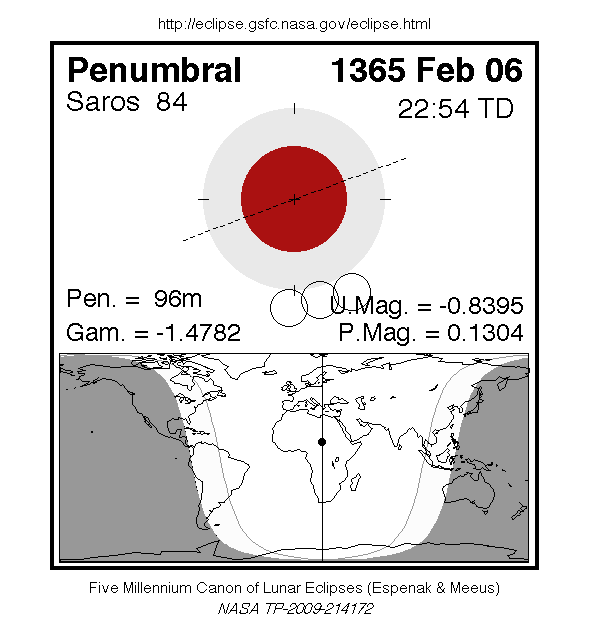
| 1365-02-00-Apulia | February 1365 JL | A lunar eclipse on 8th of February (actually 6th) predicts cold and wind; almost all people fall ill with fever and cough, affects wide regions like Apulia, Bologna, Marche, Tuscia and Lombardy | Ancora, adì 8 de febraro, la nocte vegnando, la luna divenne tucta sanguinea per assai volte, et ancho si mostrò schura, zoè negra; et durò per spazio d'uno quarto d'una ora o più. Et per questo accidente, a quisti dì, si fu uno fiero et forte tempo, cum grandi venti et grande zelo: et si fu una sì fiera pestilenza de fredo nelle persone de' christiani, cum grande febre et tosse et male assai; et si n'è stadi de morti alchuna parte per questa malatia, et si se pò dire che non rimase nessuno, generalmente, che non sentisse la malatia. Et questo fu per tucte le parte, zoè in la Puglia et in la Marcha, in Thoscana, in Romagna, in Lombardia, et generalmente per tucto; et questo comminzò de febraro et durò di fine al mese marzo, che fu chossì grande et forte tempo et grande malatia | Again, on 8 February, when the night was coming, the moon became completely bloody for many times, and it also became dark, that is, black; and it lasted for a quarter of an hour or more. And for this reason, on this day, there was a fierce and strong weather, with great winds and great zeal: and there was such a fierce plague of cold in the people of the Christians, with great fever and coughing and much evil; and there were many deaths from this disease, and it can be said that there was no one left, in general, who did not feel the sickness. [...] | Template:Anonymus 1938b, p. 211 | None |
| 1369-00-00-Lombardy | 1369 JL | The king tried to conquer the Lombardy, but without success. The lords of Meygelon flooded a river (Po?), nearly drowning the emperor's army. A plague also struck the army. | do meinde der keyser, er wolte das lant han, und reysete in dem lande zu Lamparten von ostern untz sant Michels tag, doch gewan er keine stat noch vesten. und die herren von Meygelon verswelletent das wasser genant der Pot, und mahtent es usgona über das velt do der keyser und sin volg lag, das der keyser und das volg kume entrunnent, daz sü nüt erdrunkent. ouch kam gros sterbotte under das volg und sunderliche under die Beheme, der unzelliche vil do was. | The emperor intended to conquer the land and campaigned in the region of Lombardy from Easter until Saint Michael's Day. However, he did not succeed in capturing any town or fortress. The lords of Meygelon flooded the river called the Pot, causing it to overflow onto the field where the emperor and his army were camped. The emperor and his troops barely escaped drowning. Additionally, a great plague struck the army, particularly affecting the Bohemians, resulting in an innumerable number of deaths. | Jacobus Twinger von Könishofen: Chronik 1870-71, p. 491 | Translation by ChatGPT-3.5 |
| 1369-08-00-Bohemia | August 1369 JL | After having been crowned empress in Rome earlier this year, Elisabeth (of Pomerania) returns to Prague on August 20 where she is ceremonially received. Because there is pestilence in Bohemia, the emperor, Charles IV, returns after the celebration to Lombardy. The pestilence raged during the whole year and with the greatest intensity in the regions towards Austria. | Eodem anno die XX mensis Augusti domina Elizabeth, Romanorum imperatrix, hoc anno, ut supra dicitur, Rome per manus domini pape coronata, Pragam venit et cum omni solempnitate a clero et populo in civitate et ecclesia Pragensi suscipitur. Imperator vero, quia pestilencia erat in Bohemia, postquam reversus est de Lombardia. [...] Eodem anno, ut supra meminimus, permitente Deo propter peccata populi fuit maxima pestilencia in Boemia, et precipue in plaga illa versus Austriam, et duravit per annum integrum. Et cum appropinquaret Pragam et ibidem incepisset eciam invalescere, indicte sunt processiones et ieiunia, et placatus est dominus Deus paciens et multum misericors, et cessavit continuo pestilenciam. | In this year at the 20th day of the month of August, Lady Elizabeth, empress of the Romans, who in this year, as said above, had been crowned in Rome by the hands of the pope, returned to Prague and was received with all solemnity by the clergy and the people in the city and in the church of Prague. The emperor, however, because there was a pestilence in Bohemia, had returned to Lombardy afterwards. [...] In the same year, as mentioned above, by God's permission due to the sins of the people, there was a great pestilence in Bohemia, especially in that region towards Austria, and it lasted for a whole year. And when it approached Prague and began to intensify there, processions and fasts were instituted, and the Lord God, patient and very merciful, was appeased, and the pestilence ceased immediately. | Beneš Krabice of Weitmil, Cronica ecclesie Pragensis, in: Fontes rerum Bohemicarum, vol. IV, ed. Emler (1884), pp. 457-548, 539f. | Translation by Christian Oertel |
| 1370-00-00-Florence | 1370 JL | Due to the bad weather in the previous year, there was a great famine in Florence. This was fuelled by wars in Italy and a mortality of cattle, which is why no livestock came to Florence. | Rubrica 723a - Come' in questo anno fu grande carestia d'ogni cosa. Nel detto anno [1370] fu grandissima carestia, perocchè per la gran pioggia dell'anno passato, e perchè era stata guerra, non s'era raccolto assai abbastanza; di che convenne si mandasse per grano di fuori. E valse quell'anno lo staio fiorentino, tre mesi: ciò fu febbraio, marzo e aprile e parte di maggio, un fiorino lo staio. E quel medesimo anno di vino fu gran carestia, perocchè valse fiorini uno la barile di ricolta, e di state fiorini uno e mezzo il barile. Ancora fu carestia di carne, perocchè quell'anno era stata in Lombardia la guerra e in Toscana e in molte luogora, per la quale cagione non era venuto a Firenze bestiame di Puglia, donde ne solea venire assai. Quell'anno v'ebbe mortalità di bestiame, la qual cosa gittò assai carestia oltre all'altre cagioni di sopra narrate. | Rubrica 723a - How in that year there was a great famine of everything. In the year in question [1370] there was a great famine because not enough grain had been harvested due to the heavy rains of the previous year and the war, so grain had to be brought in from outside. In the months of February, March, April and partly in May, a staio of Florentine grain cost one florin. In the same year there was a great shortage of wine, as a barrel of wine cost one florin and in summer one and a half florins. There was also a shortage of meat, because in that year there was war in Lombardy and Tuscany and in many other places, which is why no cattle came to Florence from Apulia, where they often came from in the past. In that year there was a great death of cattle which, in addition to the other reasons mentioned above, caused a great famine. | Marchionne di Coppo Stefani 1903, p. 275 | Translation by ChatGPT-3.5; Translation by DeepL; |
| 1388-07-00-Lombardy | July 1388 JL | Great mortality throughout Lombardy, particularly in Milan, Pavia, Verona, Cremona, Parma, Ferrara and also in Venice. Many people fled like the Count of Vertù. | Capitolo XXIV. - Di grande mortalità suta in Lombardia e a Vinegia. Molto grande mortalità fu in quest'anno in tutta Lombardia cominciando del mese di luglio, e moriano di febbri pestilenziose e da posteme velenose e fu molto grande in Milano e in Pavia e in Verona e in Cremona e in Parma e in Ferrara, e quasi in tutte le città lombarde. E 'l Conte di Vertù, per la grande paura ch'avea di morire, andava ora in una terra, ora in un'altra fuggendo la mortalità; e si celatamente andava tramutando luogo che spesse volte avvenia che dov'elli si fosse non si potea sapere; e per la molta gente che vi morirono, molte terre rimasero mezze abbandonate e diserte. Ancora venne la detta mortalità in Vinegia e molti nobili cittadini consumò in quella e molto diminuì di gente quella città; e per questo molti cittadini veniziani si fuggiron quindi e andaron in luoghi istrani, e la maggior parte camparo della detta mortalità; e poi quando tornarono a Vinegia fu grande allegrezza e da tutti i cittadini fu fatta loro e parve loro esser molto ristorati nella città; nondimeno rimase la città con molto minore numero di gente. | Chapter XXIV - Of the great mortality in Lombardy and Venice. This year, from July onwards, there was a very high mortality rate throughout Lombardy. People died of pestilential fevers and poisonous abscesses, and mortality was particularly high in Milan, Pavia, Verona, Cremona, Parma and Ferrara and almost all Lombard towns. The Count of Vertù fled for fear of dying, constantly changing his whereabouts to avoid mortality. His whereabouts were often so secret that nobody knew where he was. Due to the many deaths, many towns were left half-deserted. Mortality also spread to Venice, claiming the lives of many respected citizens and significantly reducing the city's population; as a result, many Venetian citizens fled to other countries, where most survived the epidemic. When they returned to Venice, there was great joy and they were warmly welcomed by all the citizens. Nevertheless, the city was left with far fewer people. | Anonymus: Cronica volgare 1915, p. 72 | Translation by ChatGPT-3.5; Translation by DeepL; |
| 1400-04-00-Florence | April 1400 JL | A terrible plague came to Florence and many people died; in June there were more than 200 corpses a day. The citizens fled to the countryside and Bologna and Arezzo after the feast of Johan Baptist (24 June), but many people died there too. In other cities such as Rome, Naples, Pisa or Lucca, the mortality rate was just as high. In Florence, they had to reorganise because so many people had left. | Capitolo IV. — Come grande mortalità fu in Firenze e altrove questo anno. In questo anno fu in Firenze grande mortalità e cominciò del mese d'aprile, come che prima s'era veduti segnali pestilenziosi assai; però che quelli che morivano, tutti aveano aposteme velenose e pestilenziose, e grande paura n'aveano i cittadini. Poi seguitò di maggiore malizia, però che ne moriano per di cento, tutti d'aposteme; e poi di giugno seguitò maggiore però che erano per di nella città dugento corpi e' più; e poi di luglio molto maggiore, e durò insino a settembre troppo grande nella città; e ancora nel contado di Firenze fu maggiore che nella città, però che in molti popoli morirono la metà delle persone che v'erano e in alquanti molti più che la metà; e molti cittadini ch'erano fuggiti in contado morirono; e fu questo grande numero; e molte castella rimasono mezzo vòte e molte famiglie disfece. E come fu fatta la festa di santo Giovanni, grande numero di buoni cittadini si fuggirono fuori della città e andaronne colle loro famiglie nel contado di Firenze in più ville e castella; e ancora n'andarono assai a Bologna, e molti ve ne moriro nondimeno; e chi andò ad Arezzo e anche assai ve ne morí; e cosí dove n'andarono ne morí in ogni luogo che fu in tutte le terre di Toscana. Era ancora la detta mortalità nel detto tempo grandissima a Roma, che fu tal di che volle settecento o ottocento corpi morti; ma la maggior parte romei ; e ancora fu la detta mortalità in molte terre d'Italia in questo tempo, dove grande e dove minore, però che allora n'era dove a Pisa, a Lucca, a Perugia e a Napoli e in tutto il paese; e ancora era in Lombardia dove grande e dove grandissima in molte città la detta mortalità. Li Fiorentini, veggendo la città vòta di buoni e ricchi cittadini, diliberarono di soldare insino in secento provigianati a guardia de la città e infino in settecento e cinquanta lance di soldati tra per di fuori e per dentro, e cosí feciono ; e aveano allora al soldo mille trecento soldati di fanti. E cosi perché li cittadini s'erano partiti, fu ordinata la città e 'l contado e distretto loro. | Chapter IV - On the great mortality in Florence and elsewhere this year. This year there (1400)was a great mortality in Florence, which began in the month of April, although numerous plague-like signs were already visible beforehand. For the deceased all had poisonous and pestilential boils, and the citizens were greatly afraid of them. Then a greater malice followed, for a hundred people died every day, all from boils. And then in June it increased so that there were two hundred or more corpses a day in the city. And then in July it was even worse and continued on a very large scale in the city until September. It was also worse in the countryside around Florence than in the city, because in many villages half the population died and in some even more than half; many citizens who had fled to the countryside also died. It was a large number, and many places were left half empty, and many families were destroyed. After the feast of St John had been celebrated, many good citizens fled the city and went with their families to various villages and castles on the countryside surrounding Florence. Many also went to Bologna, and many died there anyway; some went to Arezzo, and many died there too. Wherever they went, people died everywhere in all areas of Tuscany. At that time, mortality was also very high in Rome, and there were days when there were seven hundred or eight hundred deaths, but most of them were Romans. Mortality was also high in many other Italian cities at this time, sometimes more, sometimes less, for example in Pisa, Lucca, Perugia and Naples, as well as throughout the country. In Lombardy, too, mortality was high to very high in many cities. The Florentines, seeing that the city was emptied of good and rich citizens, decided to pay up to six hundred guards for the defence of the city and up to seven hundred and fifty lances of soldiers both inside and outside, and so they did.They had a thousand and three hundred foot soldiers in their pay at the time. So the city and its environs and district were organised because the citizens had left. | Anonymus: Cronica volgare 1915, p. 250. | Translation by ChatGPT-3.5; Translation by DeepL; |
| 1464-07-07-Forlì | 7 July 1464 JL | High mortality in Forlì | Como fo una mortalità in Forlì. Eodem millesimo [1464], adì 7 de luglio, uenni a Forlì una gran mortalità, per modo ch’ el signore Cecco fogì a Forlinpolo e Madonna Isabetta con i figlioli e madonna uecchia fogì a Fiomana; e ‘l signore Pino si ‘n tornò in Lombardia; ch’ era uenuto a uedere la moglie: e cossì fogì hogn’ omo de Forliuio, chi in qua chi in là; parìa una badia robada. | Cronache forlivesi dalla fondazione della città all'anno 1498, p. 252 | Translation needed |