Romagna
From EpiMedDat
In Romagna, a total of 17 epidemic events are known so far. It is a region.
Map of events in Romagna
Table
| Disease | DateStart date of the disease. | SummarySummary of the disease event | OriginalOriginal text | TranslationEnglish translation of the text | ReferenceReference(s) to literature | Reference translationReference(s) to the translation |
|---|---|---|---|---|---|---|
| 1283-00-00-Italy | 1283 JL | Cattle disease in (northern) Italy, Lombardy and Romagna. | Et eodem anno fuit maxima bovum mortalitas per totam Lombardiam, Romagnolam et Ytaliam | Albertus Miliolus 1903, p. 562 | Translation needed | |
| 1283-00-00-Italy 002 | 1283 JL | Cattle death, in the following high mortality among humans in 1284 | 1283 - De mortalitate boum que fuit hoc anno. Quod sequenti anno fuit hominum mortalitas subsecut[a]. Item supraposito anno Domini MCCLXXXIII fuit maxima boum mortaliltas per totam Lombardiam, Romagnolam et Ytaliam, et sequenti anno subsecuta est mortalitas hominum. Nam apud Salinum in Burgundia in quodam loco fratrum Minorum habitabant XXII fratres, quos ibi vivos invenit quidam frater Gallicus qui habitabat in Grecia et ibat Parisius; eodem anno, cum reverteretur, invenit XI ex illis mortuos, id est medietatem numeri supradicti. Audivi ab ore ipsius hec eadem apud Regium. In aliis vero partibus mundi eodem anno mortui sunt similiter multi. Et breviter ista est regula generalis, ut, quotienscumque fuerit mortalitas boum, statim sequenti anno mortalitas hominum subsequatur. | Template:Salimbene De Adam 1966, p. 754 | Translation needed | |
| 1295-05-00-Romagna | May 1295 JL | Epidemic with high mortality in Romagna | De mense Maii fuit maxima Caristia per totam Lombardiam, adeo ut multi morerentur in viis, & domibus fame terribili. Et ipso mense obiit Dominus Henricus Episcopus Rhegiensis, & tota illa aestate fuit morbus maximus per totam Italiam | Template:Annales Caesenatenses 2003, p. 51 | Translation needed | |
| 1316-00-00-Northwest-Europe | 1316 JL | Great Famine in Northwest-Europe, therefore grain export from southern Italy; epidemic also in Italy | Nel detto anno MCCXVI grande pestilenzia di fame e mortalità avenne nelle parti di Germania, cioè nelle Magna di sopra verso tramontana, e stesesi in Olanda, e in Frisia, e in Silanda, e in Brabante, e in Fiandra, e in Analdo, e infino ne la Borgogna, e in parte di Francia; e fu sì pericolosa, che più che il terzo de la gente morirono, e da l'uno giorno a l'altro quegli che parea sano era morto. E 'l caro fu sì grande di tutte vittuaglie e di vino, che se non fosse che di Cicilia e di Puglia vi si mandò per mare gli mercantati per lo grande guadagno, tutti morieno di fame. Questa pestilenzia avenne per lo verno dinanzi, e poi la primavera e tutta la state fu sì forte piovosa, e 'l paese è basso, che l'acqua soperchiò e guastò ogni semanta. Allora le terre affogarono sì, che più anni appresso quasi non fruttarono, e corruppe l'aria. E dissono certi astrolaghi che la cometa ch'apparve, ch'ella dovea venire perché la sua infruenzia fu sopra quegli paesi. E in quello tempo la detta pestilenzia contenne simigliamente i Romagna e in Casentino infino in Mugello. | In the said year (1316) there was a great plague of famine and death in the parts of Germany, that is, in Magna above towards the north, and it spread to Holland, and to Friesland, and to Silesia, and to Brabant, and to Flanders, and to Analde, and even to Burgundy, and to parts of France; and it was so dangerous that more than a third of the people died, and from one day to the next those who seemed healthy were dead. And the cost was so great of all the victuals and wine, that if it were not for the fact that the merchants of Cicilia and Apulia were sent there by sea for the great profit, all died of hunger. This pestilence happened during the winter before, and then the spring and the whole state was so rainy, and the land was so low, that the water overpowered and spoiled every seed. Then the land drowned so, that more years after it scarcely bore fruit, and corrupted the air. And certain astrologers said that the comet that appeared, that it had to come because its infuence was over those countries. And at that time the said pestilence similarly contained the Romagna and Casentino until Mugello. | Template:Giovanni Villani 1990, vol. 2: p. 285 | Translation by DeepL |
| 1316-00-00-Romagna | 1316 JL | Many deaths caused by epidemic, which rages mainly in Romagna | De mortalitate universa Anno Domini .M.°.CCCXVIIII.°, et duobus preteritis annis, mirandum quidem acidit, atque stupendum: mortalitas videlicet tam immensa per totum fere mundum, sed in provincia Romandiole acerbior: quod multi, terra gentibus pauperata, caruerunt ecclesiastica sepultura | Template:Annales Caesenatenses 2003, p. 108 | Translation needed | |
| 1317-00-00-Romagna | 1317 JL | Epidemics in Northern Italy | Anno Domini Millesimo CCCXIX. & duobus praeteritis Annis mirandum quidem accidit atque stupendum, Mortalitas videlicet tam immensa per totum fere Mundum; sed in Provincia Romandiolae acerbior, quod multi Terrae gentibus pauperatae caruerunt Ecclesiasticam sepulturam. | Template:TN | Anonymus 1729, p. 1138 | None |
| 1340-06-00-Florence | June 1340 JL | Epidemic in Florence and Romagna | Eodem millesimo de mense junii et julii. Maxima pestis mortalitas fuit in civitate Florentie districtu, qua mortui sunt circa XVIm homines et mulieres; et similis casus accidit in Romandiola | Template:Anonymus 1908, p. 111 | Translation needed | |
| 1347-00-00-Florence | May 1347 JL | Epidemic follows famine in Florence, 4000 dead (mainly women and children); particularly bad in Romagna, Provence, Bologna, Vignone, Pistoia and Prato. The mortality was foretold by astrologers. | Di grande mortalità che ffu in Firenze, ma più grande altrove, come diremo apresso Nel detto anno e tempo, come sempre pare che segua dopo la carestia e fame, si cominciò in Firenze e nel contado infermeria, e apresso mortalità di genti, e spezialmente in femine e fanciulli, il più in poveri genti, e durò fino al novembre vegnente MCCCXLVII ma però non fu così grande, come fu la mortalità dell'anno MCCCXL come adietro facemmo menzione; ma albitrando al grosso, ch'altrimenti non si può sapere a punto in tanta città come Firenze, ma in di grosso si stimò che morissono in questo tempo più di IIIIm persone, tra uomini e più femmine e fanciulli; morirono bene de' XX l'uno; e fecesi comandamento per lo Comune che niuno morto si dovesse bandire, né sonare campane alle chiese, ove i morti si sotterravano, perchè lla gente non isbigotisse d'udire di tanti morti. E lla detta mortalità fu predetta dinanzi per maestri di strologia, dicendo che quando fu il sostizio vernale, cioè quando il sole entrò nel principio dell'Ariete del mese di marzo passato, l'ascendente che ffu nel detto sostizio fu il segno della Vergine, e 'l suo signore, cioè il pianeto di Mercurio, si trovò nel segno dell'Ariete nella ottava casa, ch'è casa che significa morte; e se non che il pianeto di Giove, ch'è fortunato e di vita, si ritrovò col detto Mercurio nella detta casa e segno, la mortalità sarebbe stata infinita, se fosse piaciuto a dDio. Ma nnoi dovemo credere e avere per certo che Idio promette le dette pestilenze e ll'altre a' popoli, cittadi e paesi [p. 486] per pulizione de'peccati e non solamente per corsi di stelle, ma tolera, siccome signore dell'universo e del corso del celesto, come gli piace; e quando vuole, fa accordare il corso delle stelle al suo giudicio; e questo basti in questa parte e d'intorno a Firenze del detto delli astrolagi. La detta mortalità fu maggiore in Pistoia e Prato e nelle nostre circustanze all'avenante della gente di Firenze, e maggiore in Bologna e in Romagna, e maggiore in Vignone e in Proenza ov'era la corte del papa, e per tutto il reame di Francia. | Of a great mortality which occurred in Florence, although it was greater elsewhere, as we will recount. In this year and season, as seemingly always after food shortages and famines, a sickness began in the city and countryside of Florence. Soon people began to die, especially women and children, and the most among the poor. It lasted until November 1347, but it was not as great as the mortality of 1340 that we described earlier. If we make a rough guess—it is impossible to do otherwise in a city as great as Florence—it seems that this time more than four thousand people died, men and more women and children. More than one in twenty died. It was ordered by the commune that no death be announced and no church bell be sounded during burials, lest people be terrified to hear of so many deaths. This mortality was foretold by master astrologers who stated that during the vernal solstice—that is when the sun entered the sign of Aries last March—the sign of Virgo was rising and Virgo’s ruler Mercury was in the eighth house of Aries, a house signifying death. And were it not for the fact that Jupiter, which brings fortune and life, accompanied Mercury in this house and sign, the mortality would have been endless—if this had pleased God. But we should believe and be certain that the Lord God promises the said pestilences and others to peoples, cities, and lands to cleanse their sins, and [that he does so] not only through the movement of the stars but sometimes—as Lord of the universe and celestial motion—according to his will. And when he wishes, he matches the movement of the stars to his judgment. Let this suffice regarding Florence, its surroundings, and the sayings of astrologers. This mortality was greater in Pistoia and Prato and in the surrounding territories nearer to Florence; it was greater in Bologna and in Romagna; it was greater at Avignon and in Provence, where the papal court was, and throughout the kingdom of France. | Template:Giovanni Villani 1990, vol. 3, pp. 485–486. | None |
| 1348-00-00-Faenza | 20 June 1348 JL | Outbreak of the Black Death in Faenza and all over the world | 1348. Mortalitas maxima per totum mundum fuit. | In the year 1348, a very great mortality occurred throughout the whole world. | Azzurini 1907, p. 96 | Martin Bauch / ChatGPT 5.2 |
| 1348-00-00-Florence | 1348 JL | In this long plague treatise-like passage, the author describes the Black Death in Florence with its symptoms, death toll and consequences. He describes how to behave in order to avoid the disease and be better prepared, although it is not possible to avoid it with certainty. He also advises people to flee infected areas early and to listen to the doctors' instructions. | Negli anni di Cristo 1348 fu nella città di Firenze una grande mortalità di persone umane le quali morivano di male pestilenziale; e molti gran fatti se n’ode dire dalle persone antiche e assai se ne truova iscritti; e fra gli altri ne (p. 230) scrive assai chopiosamente messer / (c. 65v) Giovanni Bochacci inn u·llibro che fecie di ciento novelle, ed è nel prencipio del libro. Di prima chominciò lavgiente a morire di cierto enfiato che venia chon gran doglia e chon repente febre o nell’anguinaia o sotto le ditella o nella ghola, da piè dell’orechie; e viveano quatro o sei dì. Di poi grebbe, e morivano in due dì o meno; e inn utimo e’ si venne tanto a spargiere questo veleno, che si dimostrava in cierte bolle pichole ch’apariano nelle charni per qualunche luogho della persona: e queste erano più pericholose che l’enfiato e di meno rimedio. E di poi, più nel chuore della moria, aparivano a’ più pe·lle charni cierti rossori e lividori, e sputavano sanque od e’ gittavano pel naso o di sotto: e questo era pessimo sengnio e sanza rimedio. E, brieve, e’ chaschavano, e grandi e piccioli, da un dì a un altro: inn una ora si vedea ridere e mottegiare il brighante e nell’ora medesima il vedevi morire! E venne la chosa a tanto, che molti ne morivano pe·lla via e su pe·lle panche, chome abandonati, sanza aiuto o chonforto di persona: solo erano posti quivi perché fussono da’ vicini sotterrati per fuggire il puzo. E tale vi s’andava, che ssi vedea solo in chasa e abandonato, per avere qualche sochorso. Molti per farneticho andavano impazando pe·lla terra; molti se ne gittavano ne’ pozi, a tterra delle finestre e inn Arno; e tale s’uccideva per gran farneticho o per gran pena o dolore. Molti si morivano che non erano veduti e ’nfradiciavano su pe·lle letta; molti n’erano sotterrati che anchora erano vivi. Non si trovava chi gli servisse né chi gli sotterrasse; e più, che se ttu avessi voluto un testimone a un testamento, tu non llo potevi avere, o se pure ne trovavi niuno, e’ voleva sei o otto fiorini. Aresti veduto iª crocie ire per un chorpo, averne dietro tre o quatro prima giungniesse alla chiesa: assai n’erano posti la notte alle reggi di fuori della chiesa e nella via n’erano gittati assai. Molte chose maravigliose si vidono: assai, per vicitare uno infermo, per ghovernallo o ttocharlo, o llui o suoi panni, di fatto chaschare morti. E fra ll’altre chose, dicie messere Giovanni Bochacci che vide due porci grufolare e stracciare cierti pannicielli d’un povero uomo morto, rimasi nella via: di fatto i detti porci chascharono morti su que’ cienci istracciati da lloro. O vedi di quanto pericholo e di quanto rischio questo male pestilenziale è: non si può troppo guardare. Ora, chome voi avete in parte veduto e potuto chonprendere, la moria fu innistimabile, e diciesi, e chosì fu di cierto, che nella nostra città morirono i due terzi delle persone; ché era istimato / (c. 66r) che in Firenze avesse in quel tenpo CXX mila anime, che nne morirono, cioè de’ chorpi, ottantamila. Pensate se fu frachasso! Non è da prenderne gran maraviglia perché questo fusse, ché molte chagioni ci furono da inciendere il malore; e fu maggiore maraviglia, chi chonsiderasse bene ogni chosa, di que’ che chanparono che di que’ che morirono. E lle chagioni furono in parte queste, cioè: in Firenze non si chonoscieva, diciamo pe·lla chomunità, questo male, perché a gran tenpo non era apparito; era Firenze molto ripiena di giente e di più quantità ch’ella fusse mai; l’anno dinanzi era suto in Firenze gran fame, e credo non era nel centinaio venti che avessono pane o biada alchuna, e quelli chotanti n’avevono pocho: (p. 231) vivettesi d’erbe e di barbe d’erbe e di chattive, non lle chonoscieresti oggi, e beevano acqua, e tutto il chontado era pieno di persone che andavano pasciendo l’erbe chome le bestie. Chonsidera chome i loro chorpi erano disposti! Apresso, chom’è detto, e’ non aveano arghomento né riparo niuno; e fu la chosa sì grande e ssì aspra, che ll’uno non poteva atare l’altro di nulla, e per queste chagioni e’ si morirono sanza rimedio. Oggi è avvenuto, per esenpro di questa e di molte altre che spesso sono di poi istate, che ci s’è preso assai ripari, non però che gran danno non faccia; ma pure credo che assai ne chanpano per virtù de’ rimedi, ché dichono e medici che lle reghole ch’essi danno per rimedio di questo veleno è uno armarsi alla difesa. Non è però che uno che sia molto bene armato non possa essere morto, ché gli fia dato d’una lancia o d’una ghiera o d’una bonbarda o prieta che ll’ucciderà; chosì potrà avenire al buon uomo, che fia provveduto contro alla pestilenza, e gli giungnierà una nebbia o un puzo di chorruzione o un fiato d’altro malato che fia più forte di lui e ucciderallo pure. Ma che è? Egli è assai chiaro che a una zuffa mortale à gran vantaggio chi è bene armato, e meno ne muoiono che de’ disarmati; e però vo’ dire che’ rimedi sono buoni. Vuolsi avere chonsiglio chon valenti medici e pigliare per iscritto loro chonsiglio o loro riciette, e quelle osservare diligientemente e non se ne fare punto beffe. Da mme voglio abbi questo chotanto chonsiglio. Tu udirai dinanzi che lla mortalità sia nella città di Firenze un anno o due, perché prima offende la Romangnia o lla Lonbardia che lla città nostra, e quasi per uso l’anno vengniente ell’è in Firenze; o almeno il verno dinanzi tu nne sentirai qualche isprazo o nel contado o nelle pendici della terra, il perché chiaro si prosu/me (c. 66v) la mortalità dovere essere in Firenze. E sappi che di febraio ella comincia a ffarsi sentire dentro, e chosì va crescendo tutto lulglio; e da mezo luglio in llà ed ella s’apicha alle persone da bene e a quelli che sono vivuti regholati, e chomincia a morire meno giente, ma de’ migliori. E quest’è perché il veleno è tanto isparto e tanto t’à chonbattuto, che t’à rotte l’armi e passato dentro; e per la dura della battaglia e’ ti viene a strachare e a pocho a pocho a chorronperti, e ’nfine e’ t’abbatte. E però piglia questo riparo. Chomincia il verno dinanzi a ghovernare te e la tua famiglia tutta per questa via. Prima, fa di quardarti dall’umido quantunche ttu puoi e non patire punto il freddo. Apresso, usa il fuocho ongni mattina prima escha fuori e piglia qualche chosa sechondo lo stomacho che ài: o un pocho di pane e un mezo bichiere di buon vino o di malvagia, o una pillola apropiata a cciò, o un pocho d’utriacha quando fusse piove o umidori, de’ quindici dì due o tre mattine a llato, sul dì, e prima ti levi e dormi un pocho poi; e non mangiare nulla da ivi a ore cinque. Se tti venisse beuto o volessi bere un mezo bichiere di malvagia sarebbe buono, ma non altri vini grossi; o sse avessi lo stomacho debole o frigido, piglia degli otto dì una volta a tai tenpacci una barba di gengiovo (p. 232) in chonservo e bei un mezo bichiere di malvagia, e sta di poi cinque ore che ttu non mangi altro. O ttu piglia un gherofano o un pocho di ciennamo o uno ghughiaio di tregiea o quatro derrate di zafferano o due o tre noci chotte e due o tre fichi sanza pane o qualche chosetta, sechondo che sse’ chonsigliato. E quello vedessi ti faciesse noia lascialo istare; e se llo stomacho istà meglio digiuno, non gli dare impaccio. Non uscire fuori troppo avaccio: quand’è nebbia e piova istatti al fuocho. Desina all’ora chonpitente, mangia buone chose e non troppo; levati chon buono apitito, quarti dalle frutte e da’ funghi, non ne mangiare, o pocho e di rado. Esercita la persona, ma non chon faticha, che ttu non sudi e non n’abbi ’ansare o a sciorinarti de’ panni; quarti dal chiavare e dalle femine, non ti impacciare chon niuna in quell’anno. Non mangiare e non bere se non n’ài voglia; e quando avessi in sullo stomacho, lascialo prima digiestire e di poi ista un’ora prima mangi o bei. quarti dalla ciena, pocho mangia e buone cose; non mangiare porcho in niuno modo; usa, se ài buono istomacho, l’acieto e ll’agresto, ma non tanto ti desse noia a smaltire. Fa di stare sobrio del chorpo e che ttu escha il dì due volte il meno: se fussi istiticho e duro del chorpo, fatti uno arghomento degli otto dì o de’ quindici dì. / (c. 67r) Non ti raviluppare troppo nel dormire, levati al levare del sole. E ’n questa forma passa il verno. E tenendo questo o migliore istile, tu verrai a purghare lo stomacho overo il chorpo tutto, per modo che lla churrezione dell’aria non troverrà materia d’apicharsi. Alla primavera o veramente di marzo tu sentirai dove è buono fuggire. Aspetta che de’ tuoi cittadini si muovano: non volere essere de’ primi, ma, partitone quatro o sei piglia partito e va dove ne vanno i più e in sì fatta città che pel tuo danaio tu truovi ciò che bisongnia alla santà del corpo. Non essere isciocho, o per masserizia o per niuna chagione, di rinchiuderti in chastella o in ville o in lluoghi che non vi sia e medici buoni e medicine che nne interviene che l’amicho si muore e spende nella fine due tanti che gli altri ed essene fatto beffe, sanza il dolore e i·rripitio dell’animo che mai te ne puoi dare pacie. Non sono tempi da masserizia, ma da trarre il danaio d’ongni luogho che ttu puoi; e spendi larghamente nelle chose che bisongnia, sanza niuna masserizia che ssia però che non si guadangniano se non per ispenderli per chanpare o vuoi per vivere e per onore, o nelle brighe o in simili casi. E però ti chonforto del fuggire presto e quest’è il più sichuro ischanpo ci sia. Fa d’avere de’ denari: e non giuchare, ché potresti rimanere sulle secche, e a que’ tenpi se ne truovano molto pochi che te ne prestassono per molti rispetti. Sì che sia savio: provediti tanto dinanzi rauni treciento fiorini il meno, e non ne tocchare mai niuno se non abbisogni e non dire che ttu gli abbia, ché ti sarebbono chiesti. E togli chasa agiata pe·lla tua famiglia, e non punto istretta, ma chamere d’avanzo. E nella istate usa chose fresche: buoni vini e picholi, de’ polli e de’ chavretti e de’ ventri o peducci di chastrone choll’acieto o llattugha, o de’ ghanberi, se nne puoi avere. Istatti il dì di meriggio al frescho: non dormire se puoi farlo, o ttu dormi chosì a sedere. Usa d’un lattovaro che fanno fare i medici di ribarbero, danne a’ fanciulli ché uccide i (p. 233) vermini. Mangia alchuna volta la mattina un’oncia di chassia, chosì ne’ bucciuoli, e danne a’ fanciulli: fa d’averne in chasa e frescha e del zuchero e dell’acquarosa e del giulebbo. Se ài sete il dì bei di quello rinfreschati i polsi, le tenpie e al naso choll’acieto ben forte. None istare dove sia molta giente e spezialmente in luogho rinchiuso chome in loggie o in chiese o in simili luoghi. Chon chi venisse dell’aria chorrotta o che avesse infermi in chasa o fusse morto di sua giente, non istare / (c. 67v) cho·llui se none il meno che ttu puoi, non dimostrando ischifarlo per modo s’aveggha, acciò non isdengniasse o non pigliasse ischonforto. Fuggi quanto puoi maninchonia o pensiero: usa dove si faccia chose da diletto e dove tu possa pigliare ispasso chon piacere e chon allegreza, e non pensare punto di chosa ti dia dolore o chattivo pensiero. Chome ti venisse, fuggilo, o in pensare ad altro o dove si ragioni di darsi piaciere o dove si faccia alchuna chosa che tti piaccia o ttu giuocha, quando tai chasi t’avenissono, e di pochi danari per volta: non passare di perdere uno fiorino; e se llo perdi, lascialo andare sanza pensarvi e non volere per quel dì rischuoterti, ché potresti, dove vuoi fuggire pensiero e dolore, andarlo cierchando. Se ài chavallo, vatti a ssollazo e per la terra e di fuori la mattina pe·llo frescho e lla sera. Istà chasto il più che ttu puoi. Fuggi ongni chosa putidra e ll’aria ivi apresso, non vi istare tieni in diletto e in piaciere la tua famiglia e fa cho·lloro insieme buona e sana vita, vivendo sanza pensiero di fare per allora masserizia, ché assai s’avanza a stare sano e fuggire la morte. Al presente non iscriverrò più avanti sopra la detta materia, perché nel vero i medici fidati e che chonoschono la tua natura sarebbono quelli che meglio t’amaestrerrebbono di tale provedimento; e però, chom’è detto, il chonsiglio si vuole avere da lloro, nonistante che lle sopra iscritte chose sieno utili e buone a oservalle ne’ detti tenpi. | In the year of Christ 1348 there was a great mortality in the city of Florence among the people who died of a pestilential disease. Many stories about it are told by old people, and many are written down; and among others, Giovanni Boccaccio tells about it in detail in a book of a hundred novellas, and it is at the beginning of the book. At first people began to die of a swelling, accompanied with great pain and sudden fever, either in the groin, under the armpits, or in the neck, below the ears; they lived four or six days. Afterwards the disease grew worse, and they died in two days or less; finally this poison spread so far that it showed itself in certain small bumps which appeared on the skin anywhere on the body: and these were more dangerous than the swellings and more difficult to treat. Later, in the heart of the epidemic, certain redness and bruises appeared on the skin of many people, and they spat blood or bled from the nose or underneath: and this was a very bad sign and without cure. In short, they fell, big and small, from one day to the next: one hour you would see someone laughing and joking and the next hour you would see him die! It got to the point that many died in the streets and on the benches, like abandoned people, without help or consolation from anyone: they were only left there to be buried by the neighbours to avoid the smell. And it happened that people left, because they were alone and abandoned at home, to get some kind of help. Many wandered madly through the country because of delirium; many threw themselves into wells, from windows and into the Arno; and some killed themselves because of great delirium or great pain or suffering. Many died without being seen, rotting in their beds; many were buried even though they were still alive. There was no one to serve them or bury them; and what is more, if you needed a witness for a will, you could not get one, or he asked for six or eight florins. Crosses were seen brought for a body, and three or four followed it before it reached the church: many were deposited at night on the lattices outside the church, and many were thrown away in the street. Many marvellous things were seen: many who visited, nursed or touched a sick person, either him or his clothes, fell down dead. Among others, Giovanni Boccaccio relates that he saw two swine rooting and tearing certain rags of a dead poor man who had remained in the street: and immediately the said swine fell down dead on the rags they had torn. Oh, see how dangerous and risky this pestilential disease is: one cannot protect oneself enough. Now, as you have partly seen and understood, the mortality was immeasurable, and it is said, and so it certainly was, that in our city two-thirds of the people died; for it was estimated that there were 120,000 souls in Florence at that time, of whom 80,000 died. Think what an uproar that was! It is not very surprising that this happened, for there were many causes which increased the evil; and it is more surprising, when all is well considered, how many survived than how many died. The reasons were partly these: in Florence this disease, let us say for the community, was not known, as it had not appeared for a long time; Florence was very populous, more so than ever; the year before there was great famine in Florence, and I believe there were not a hundred people that had bread or corn, and those that had had little: they lived on herbs and roots and bad things that would not be recognised to-day, and they drank water, and all the surrounding country was full of people eating herbs like beasts. Think about what state their bodies were in! In addition, as I said, they had no remedies or defences; and the evil was so great and so violent that they could not help each other in anything, and for these reasons they died without remedy. Now it is so, in consequence of these and many others that have often taken place afterwards, that many precautions have been taken, not that it no longer does much harm; but still I believe that many survive by the power of the remedies, for the doctors say that the rules they give to ward off this poison are a kind of defence. This does not mean that one who is very well armed cannot die, for he may be struck by a spear thrust or a bullet or a stone that kills him; so it may happen to the good man who has taken precautions against the plague that a mist or a stench of putrefaction or a breath of another sick person stronger than himself may strike him and still kill him. But what is that? It is clear that in a mortal fight he who is well armed has a great advantage, and dies less than the unarmed; therefore I would say that the remedies are good. One should seek advice from good doctors and get their advice or prescriptions in writing and follow them conscientiously and not make fun of them. I would like you to take this advice to heart. You will hear that mortality lasts a year or two in the city of Florence, because it first strikes Romagna or Lombardy before it reaches our city, and almost always the following year it is in Florence; or at least in the winter before you will hear a whiff of it, either in the surrounding countryside or in the suburbs, so it is clear that mortality will come to Florence. And know that it begins to make itself felt in February, and so it grows into July; and from the middle of July it affects the wealthy people and those who have lived well, and fewer people die, but of the best. This is because the poison has spread so widely and has affected you so badly that it has broken through the armour and got inside; and because of the hardness of the battle it will tire you out and gradually wear you down, and finally it will strike you down. Therefore, take these precautions. In winter, begin to protect yourselves and your whole family in this way. First, beware of dampness as much as possible and do not endure cold. Then use fire every morning before you go out, and take something according to your stomach: a little bread and half a glass of good wine or malmsey, or a suitable pill, or a little theriac, if it is raining or damp, two or three mornings of fifteen days, during the day and before you get up, and then sleep a little; and eat nothing till five hours later. If you are thirsty or wish to drink half a glass of malmsey, that would be good, but no other strong wines; or if you have a weak or cold stomach, once in eight days at such times take a pickled ginger root and drink half a glass of malmsey, and then eat nothing else for five hours. Or take a clove leaf or a little cinnamon or a spoonful of trigonella or four grains of saffron or two or three boiled nuts and two or three figs without bread or anything else, as you are advised. And if you realise that it is not good for you, leave it alone; and if it is better for the stomach to remain sober, do not strain it. Don't go out too early: stay by the fire in fog and rain. Eat at the proper time, eat good things and not too much; get up with a good appetite, avoid fruit and mushrooms, do not eat them, or eat only a little and rarely. Exercise, but not strenuously, so that you do not sweat and do not feel the need to dry your clothes; avoid sexual intercourse and women, do not mix with them this year. Do not eat or drink if you do not feel like it; and if you have something in your stomach, let it digest first and then wait an hour before eating or drinking. Eat little and good things in the evening; do not eat pork in any way; if you have a good stomach, use vinegar and verjuice, but not so much that it gives you difficulty in digesting. Keep your body light, and see that you get out twice a day: If you are constipated and hard in body, take a treatment of eight or fifteen days. (c. 67r) Don't get too entangled in sleep, get up at sunrise. In this way spend the winter. And if you keep up this or a better style, you will so cleanse your stomach or your whole body that the bad air will find no clue. In spring, or really in March, you will realise where you should flee to. Wait till your fellow-citizens move: do not be the first, but after four or six have gone, go where most go, and to such a town where you will find for your money all that is necessary for the health of the body. Do not be foolish, either for miserliness or for any other reason, to shut yourself up in castles or villages or places where there are no good doctors and medicines, for it happens that the friend dies and ends up spending twice as much as the others and is laughed at, without the pain and trembling of the soul that never leaves you in peace. These are not times for miserliness, but to get money from wherever you can; and spend generously on what is necessary, without miserliness, for it is only earned to spend on survival or on life and honour, or on difficulties or similar cases. Therefore, I encourage you to escape early, and that is the safest escape there is. Make sure you have money: Don't gamble, because you could lose it all, and at these times there are very few who would lend it to you for many reasons. So be wise: Take care in advance to collect at least three hundred florins, and do not touch them unless it is necessary, and do not say that you have them, for they would be demanded of you. And take a spacious house for your family, not too cramped, but with extra rooms. And in summer use fresh things: good wine and small, chickens and goatlings, and the bellies or feet of mutton with vinegar or lettuce, or crabs if you can get them. Keep cool at midday: do not sleep if you can avoid it, or sleep sitting up. Use a lotion that doctors make with rhubarb, give it to children as it kills worms. Eat an ounce of cassia sometimes in the morning, in the buds, and give it to the children: keep it fresh in the house together with sugar and rose-water and syrup. If you are thirsty during the day, cool your wrists, temples and nose with strong vinegar. Do not stay in places with many people, especially in closed rooms such as loggias or churches or similar places. Do not stay with someone who comes from a contaminated area or has sick people in the house or whose relatives have died, as little as possible without showing it, so as not to offend or discourage them. Flee as much as you can from melancholy or sorrow: Stay in places where you can find joy and entertainment, and don't think about things that cause you pain or bad thoughts. When they come, flee from them by thinking of something else or by staying in places where there is pleasure or where people do things you like or where you can play, but only with little money: do not lose more than a florin; and if you lose it, let it go without thinking about it and do not try to recover that day, because where you want to flee sorrow and pain, you go in search of it. If you have a horse, go out in the morning and evening for pleasure. Be as chaste as possible. Flee from everything foul and the air in the neighbourhood, do not stay there. Keep your family in joy and contentment and lead a good and healthy life together, without thinking of miserliness, for it is enough to stay healthy and avoid death. I will not write further on this subject for now, because in truth, trustworthy doctors who know your nature are the ones who can give you the best advice; therefore, as I said, advice should be sought from them, although the things mentioned above are useful and good to observe in the times mentioned. | Giovanni di Pagolo Morelli: Ricordi 2019, pp. 229-233 | Translation by ChatGPT-3.5; Translation by DeepL; |
| 1348-06-20-Faenza | 20 June 1348 JL | Outbreak of the Black Death in Faenza with blood spitting | 1348 iunii 20. Incepit Faventiae mortalitas gangolarum et sputi sanguinis, et duravit per annum. | On 20 June 1348, in Faenza, a mortality of swellings and spitting of blood began, and it lasted for a year. | Azzurini 1907, p. 129 | Martin Bauch / ChatGPT 5.2 |
| 1360-00-00-Europe | April 1360 JL | The passage describes the way in which the plague spread, beginning in England in April and May and then spread to France, Lombardy, Romagne, Marche and Majorca. Matteo Villani criticised the persistence of people in their sins and the forgetting of the Judgement Day. | Della pistolenzia dell'anguinaia ricominciata in diversi paesi del mondo, e di sua operazione. In Inghilterra d'aprile e di maggio si cominciò, e seguitò di giugno e più inanzi, la pistolenzia dell'anguinaia usata, e ffuvi tale e tanta, che nella città di Londra il dì di san Giovanni e 'l seguente morirono più di MCC Cristiani, e in prima e poi per tutta l'isola. Gran fracasso fece per simile ne reame di Francia: nella Proenza trafisse ogni maniera di gente. Vignone corruppe in forma che no vi campava persona: morironvi nove cardinali, e più di VIIC plelati e gran cherici, e popolo inumerabile. E di maggio e giugno si stese e percosse la Lombardia, e prima Commo e Pavia, co tanta roina, che quais le recò in desolazione. In Milano misse il capo, dove altra volta nonn-era stata, e tirò a terra il popolo quasi affatto, con grande orrore e spavento di chi rimanea. Vinegia toccò in più riprese, e tolsele oltre a XXM viventi. La Romagna opressò forte e assai quasi per tutte sue terre, ma ppiù l'una che l'altra, e nell'entrata del verno cominciò a restare i Lombardia, e a gravare la Marca, e lla città d'Agobbio forte premette. L'isola della Maiolica perdé oltre alle tre parti de li abitanti. Né lasciò l'alpi delli Ubaldini sanza macolo per molti de' (p. 514) luoghi suoi. E molti paesi del mondo inn-uno tempo erano di questo pistolenzia corrotti, né già quelli a ccui parea che Dio perdonasse no ritornavano a llui per contrizione, partendosi dalle iniquitadi e dalle prave operazioni ostinate, e come le bestie del macello, veggendo l'altre nelle mani del beccaio col coltello svenare, saltavano liete nella pastura, quasi come a lloro non dovesse toccare, ma più dimenticando li uomini il giudicio divino si davano sfacciatamente alle rapine, alle guerre, e al mantenere compagne contra ogni uomo, alle ingiurie de' prossimi, e alle disoluta vita, e a' mali guadagni assai più che nelli altri tempi, corompendo la speranza della misericordia di Dio per lo male ingegno delle perverse menti; e cciò per manifesta sperienza si vide in tutte le parti del mondo dove la detta pistolenzia mostrò il giudicio di Dio. | On the resurgence of the plague of the groin in various countries of the world and its effects In England, the familiar plague of the abdomen began in April and May and continued through June and beyond. It was so devastating that on St John's Day and the following day, more than 1200 Christians died in the city of London, as well as before and after throughout the island. The plague caused similar chaos in the Kingdom of France; in Provence it affected people of all kinds. In Avignon, it raged so strongly that no one there was spared: nine cardinals died, over 700 prelates and great clerics as well as countless people from the populace. In May and June, it spread to Lombardy, first to Como and Pavia, causing such destruction that these cities were almost depopulated. In Milan, where it had not been before, it caused great damage and decimated almost the entire population, causing great fear and terror among the survivors. Venice was hit in several waves and lost over 20,000 people. Romagna was hit hard, almost all towns were affected, some more than others. At the end of the winter, the plague began to subside in Lombardy, while it hit the Marche hard and put the city of Gubbio under severe pressure. On the island of Majorca, over three quarters of the population died. Even the Alps of the Ubaldini were not spared, and many of their towns were badly hit. At the same time, many countries of the world were afflicted by this plague, and those who believed that God had mercy on them did not return to him through repentance, but persisted in their sins and evil deeds. Like cattle for the slaughter, seeing their fellow animals in the hands of the butcher with a knife, they jumped happily to the pasture as if they would not be hit. But people, forgetting divine judgement, shamelessly indulged in robbery, wars and maintaining gangs against everyone, committing injustice against their neighbours, living a dissolute life and seeking ill-gotten gains, far more than at other times. This corrupted the hope of God's mercy by the evil nature of their perverse minds; and this could be observed in all parts of the world, where the aforementioned plague showed the judgement of God. | Matteo Villani 1995, vol. 2, pp. 514-515. | Translation by ChatGPT-3.5; Translation by DeepL; |
| 1361-00-00-Milano | 1361 JL | The pestis secunda is ravaging Venice, France, Spain, Germany, Avignon, Lombardy and Romagna, but sparing Modena, Bologna and Tuscany. Milan suffers a loss of 11.000 people | Dicto millesimo M.ccclxj per totum illum annum in partibus orbis fuit pestilentialis mortalitas valde magna, quae de uno loco ad alium per temporis spacium transibat; fuit etiam dicta mortalitas in civitate Venetiarum, in Francia, in Hispania, in Alemania, in Avenione ubi Papa residebat et in aliquibus partibus Romandiolae et quasi in omnibus civitatibus Lombardiae, quia prout ego Iohannes de Bacano audivi ab aliquibus fide dignis, in civitate Mediolani et eius diocesi inter homines et mulieres plusquam xj. milia personarum ex dicta pestilentia obierunt, ita quod medietas personarum in locis ubi erat pestilentia habitantium et ultra creduntur ex [p. 177] dicta pestilentia decessisse; tamen dicta pestilentia ad civitatem Mutinae nec Bononiae ne in Tuscia nec in aliis multis mundi locis in dicto anno minime pertransivit. Pestilentia autem illa era apostemata pessima, ex quibus personae, ut plurimum, subito vel quasi demigrabant. | In the said year 1361, throughout that entire year, there was a very great plague-induced mortality in parts of the world, which moved from one place to another over a span of time. This mortality was also said to have occurred in the city of Venice, in France, in Spain, in Germany, in Avignon where the Pope resided, and in some parts of Romagna, and in almost all the cities of Lombardy. For, as I, Johannes de Bacano, heard from some trustworthy sources, in the city of Milan and its diocese, more than eleven thousand people, both men and women, died from this plague, so that it is believed that half of the inhabitants in the places where the plague was present and more died from this plague. However, this plague did not pass through the city of Modena, nor Bologna, nor in Tuscany, nor in many other parts of the world in that year. This plague, however, was marked by very bad abscesses, from which most people, suddenly or almost suddenly, perished | Giovanni da Bazzano - Chronicon Mutinense 1917, pp. 176-179 | Translation needed |
| 1361-00-00-Piemont | 1361 JL | Outbreak of an epidemic, that travels eastwards from Piedmont with many deaths | In lo dicto millesimo fu una grande mortalità in queste parte. Cominzò in Piamunti et per le contrade e dessèse a Millano, e morilli oltra che cento milia christiani. [p. 144] Venne oltre a Parma e llì fu grandissima mortalità; et passò oltra, a Rimino, per tucta la Romagna, com fu a Cesena et a Forlì, et a Faenza, et a Ymola ne fu pocha; et finalmente in ogni parte | In the said thousandth year there was a great mortality in these parts. It began in Piedmont and through the districts and went to Milan, and died more than a hundred thousand Christians. [p. 144] It came beyond Parma and there was a great mortality; and it passed beyond, to Rimini, through the whole of Romagna, as it was in Cesena and Forlì, and Faenza, and in Imola there was little; and finally in every part. | Template:Anonymus 1938b, pp. 143–144 | Translation by DeepL |
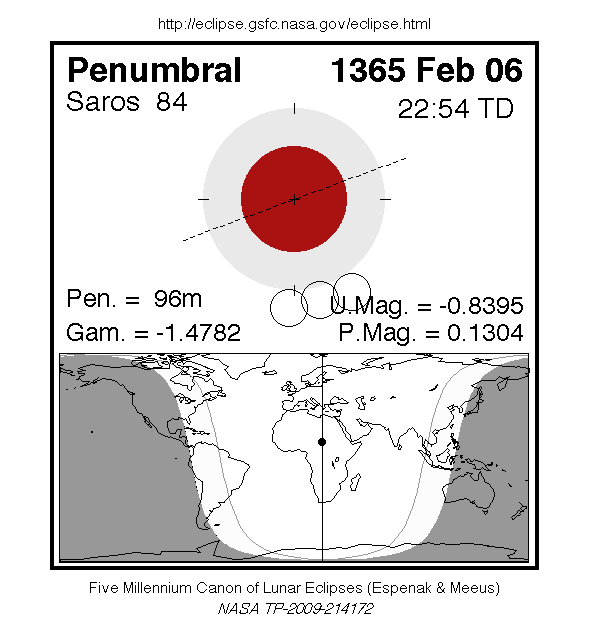
| 1365-02-00-Apulia | February 1365 JL | A lunar eclipse on 8th of February (actually 6th) predicts cold and wind; almost all people fall ill with fever and cough, affects wide regions like Apulia, Bologna, Marche, Tuscia and Lombardy | Ancora, adì 8 de febraro, la nocte vegnando, la luna divenne tucta sanguinea per assai volte, et ancho si mostrò schura, zoè negra; et durò per spazio d'uno quarto d'una ora o più. Et per questo accidente, a quisti dì, si fu uno fiero et forte tempo, cum grandi venti et grande zelo: et si fu una sì fiera pestilenza de fredo nelle persone de' christiani, cum grande febre et tosse et male assai; et si n'è stadi de morti alchuna parte per questa malatia, et si se pò dire che non rimase nessuno, generalmente, che non sentisse la malatia. Et questo fu per tucte le parte, zoè in la Puglia et in la Marcha, in Thoscana, in Romagna, in Lombardia, et generalmente per tucto; et questo comminzò de febraro et durò di fine al mese marzo, che fu chossì grande et forte tempo et grande malatia | Again, on 8 February, when the night was coming, the moon became completely bloody for many times, and it also became dark, that is, black; and it lasted for a quarter of an hour or more. And for this reason, on this day, there was a fierce and strong weather, with great winds and great zeal: and there was such a fierce plague of cold in the people of the Christians, with great fever and coughing and much evil; and there were many deaths from this disease, and it can be said that there was no one left, in general, who did not feel the sickness. [...] | Template:Anonymus 1938b, p. 211 | None |
| 1365-07-00-Romagna | July 1365 JL | Plague outbreak in the Romagna, very close to Bologna | Ancora fu una grande mortaligha per tucta la Romagna, et quasi poca gente gli rimase; inperò che per l'altre morìe che erano state, tanti gli ne morì, che mo pochi n'è romasi; et anche uno pocho da parte ne tochò in Bologna. Tucta fu de la malizia usata | Again, there was a great death in the whole of Romagna, and almost few people were left; however, because of the other deaths that had taken place, so many died, that there are now only a few Romans; and even a few died in Bologna. All of them were of the malice used | Anonymus 1938b, p. 200 | Translation by DeepL |
| 1383-07-00-Florence | July 1383 JL | Great mortality in Florence. In the beginning more than 400 persons per day died, later 8,9,12 per day. Many people flee to Bologna and the Romagna. On 22. July great riot, caused by the Ciompi and on 7th October an earthquake | Nota: del mese di Luglio, e d'Agosto del detto anno morì grandissima quantità di gente in Firenze, massimamente dal mezzo Luglio a tutto Agosto. Morirono molti fanciulli, e fanciulle piccoli, ed uomini, e donne: per dì ne morirono 400. e più; e poì in su l'entrata di Settembre mancò la detta mortalità, e morivanone per dì infino a mezzo Settembre quaranta, e più; poi mancò, e morianone otto, dieci, o dodici per infino a mezzo Ottobre. E nota, che a' dì 21. (anzi 22.) di Luglio, il dì di S. Maria Maddalena, fu grandissimo romore in Firenze, il quale levarono i Ciompi. Poi laudato Dio la detta mortalità cessò via in tutto. Nota, che detto anno a'di 7. d'Ottobre, la vigilia di S. Liperata, la notte furono tremoti in Firenze. Nota, che nel tempo della detta mortalità molta, e molta gente si partì di Firenze, e fuggì la mortalità, ed andaronne molti a Vinegia, e più in Romagna, perchè la mortalità v'era stata. | Note: In July and August of the same year (1383), a large number of people died in Florence, especially from mid-July and throughout August. Many young children and adolescents, as well as men and women, died; 400 or more people died per day. Then, at the beginning of September, the plague subsided, and forty or more people died daily until the middle of September; after that the number continued to decrease, and by mid-October only eight, ten or twelve people died daily. Note that on July 21 (actually 22), the feast day of St. Mary Magdalene, there was a great riot in Florence, caused by the Ciompi. Thank God the plague finally stopped completely. Note that on the night of October 7, on the eve of the feast of St. Liperata, earthquakes struck Florence. Note that during the said plague, many people left Florence and fled from the plague; many went to Venice and even more to Romagna because the plague had already been there. | Naddo de Montecatini: Memorie istoriche 1784, p. 66. | Translation by ChatGPT-3.5; Translation by DeepL; |
Authority data: